24 Ways to Organize a Deep Pantry Shelf From the Back to the Front
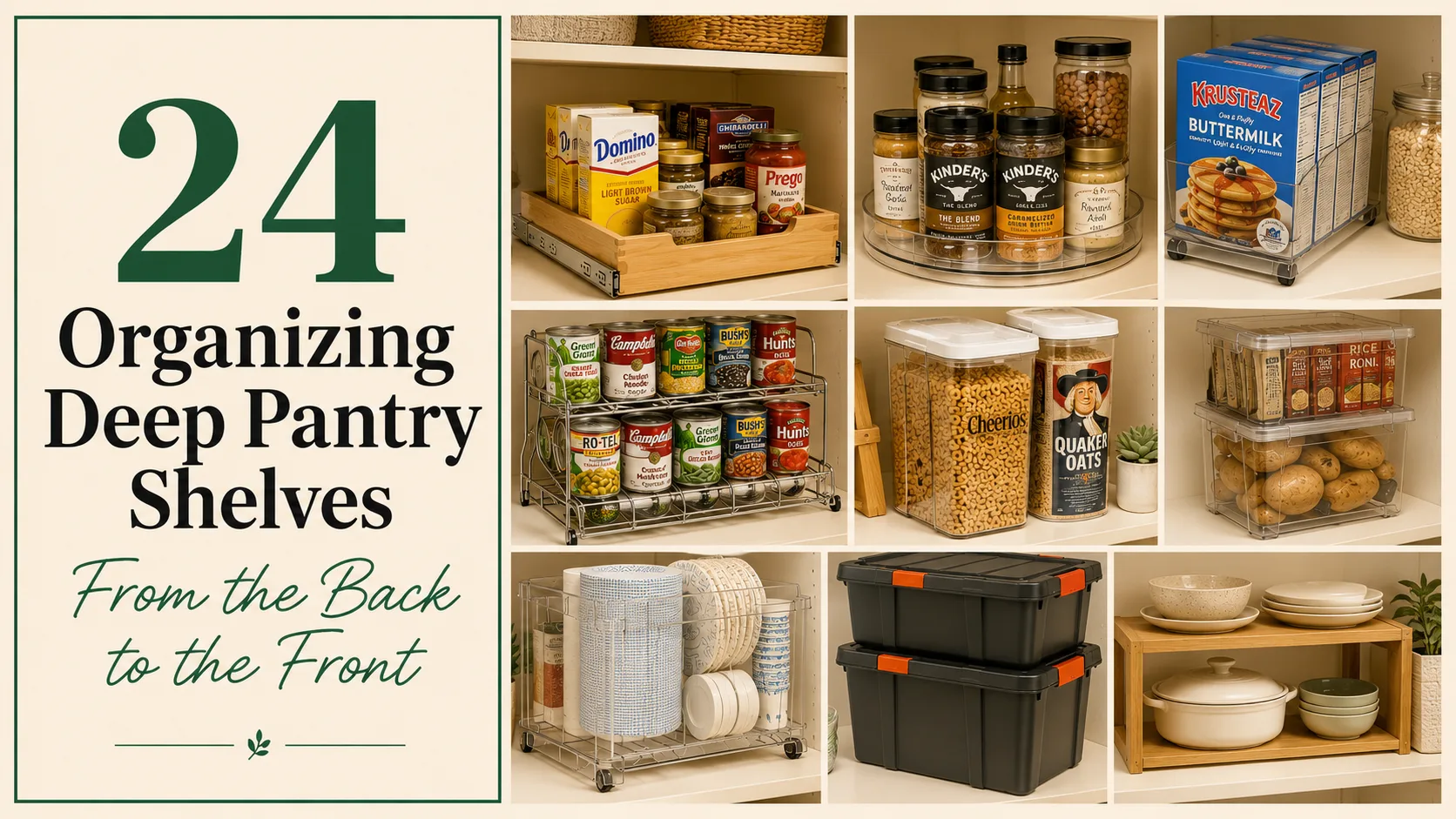
24 ways to organize a deep pantry shelf, sorted by where the problem sits, the back you can't reach, the top, eye level, the floor, and front-to-back depth.

Pin this list
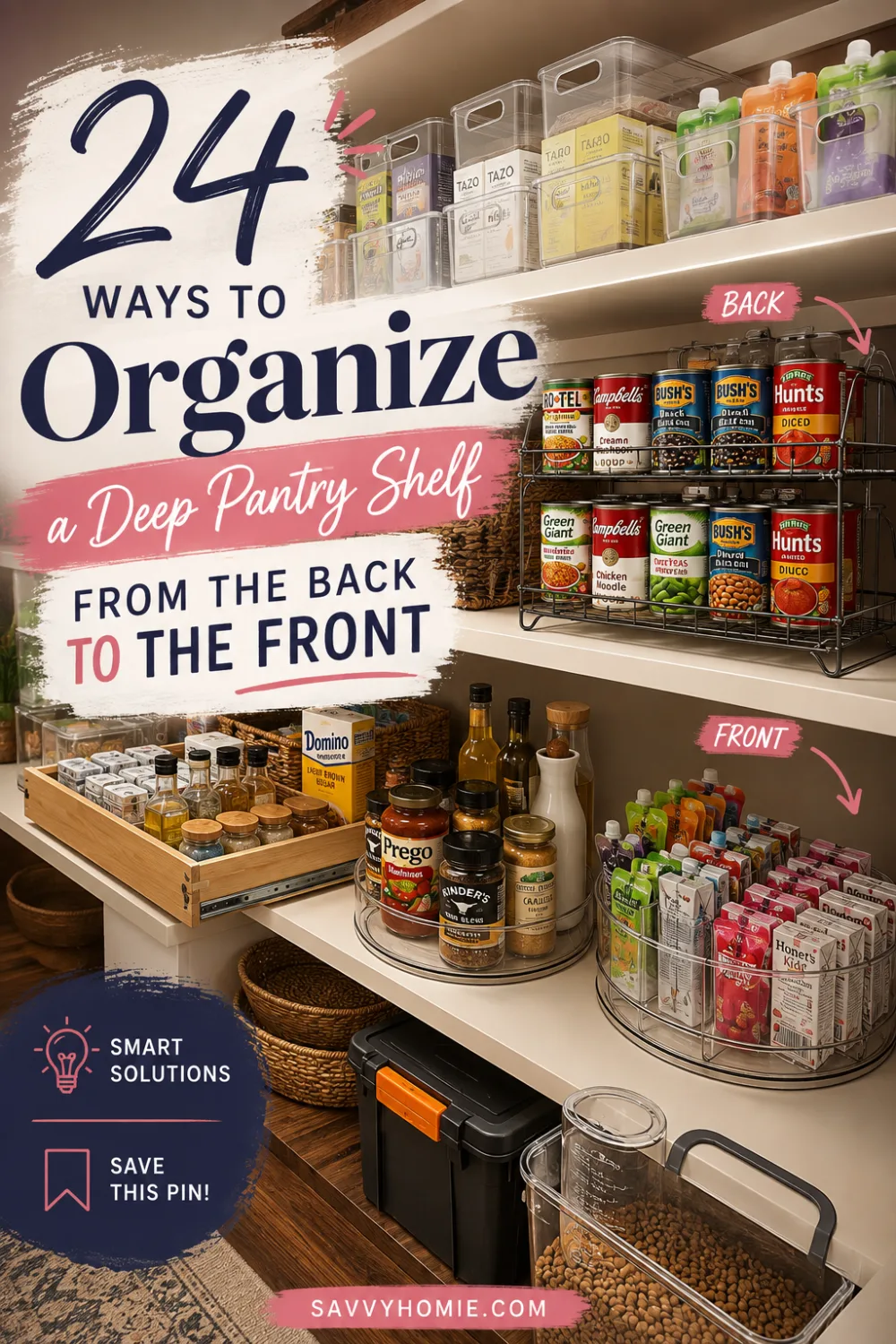
A lot of pantry advice treats a deep shelf like one long surface, when it behaves more like four or five different shelves stacked into one. What fixes the back does nothing for the floor, and what fixes the top won't touch the middle.
These 24 ways to organize a deep pantry shelf are sorted by exactly where each problem sits, not treated as one generic depth issue. Start with whichever part of your shelf is giving you the most trouble.
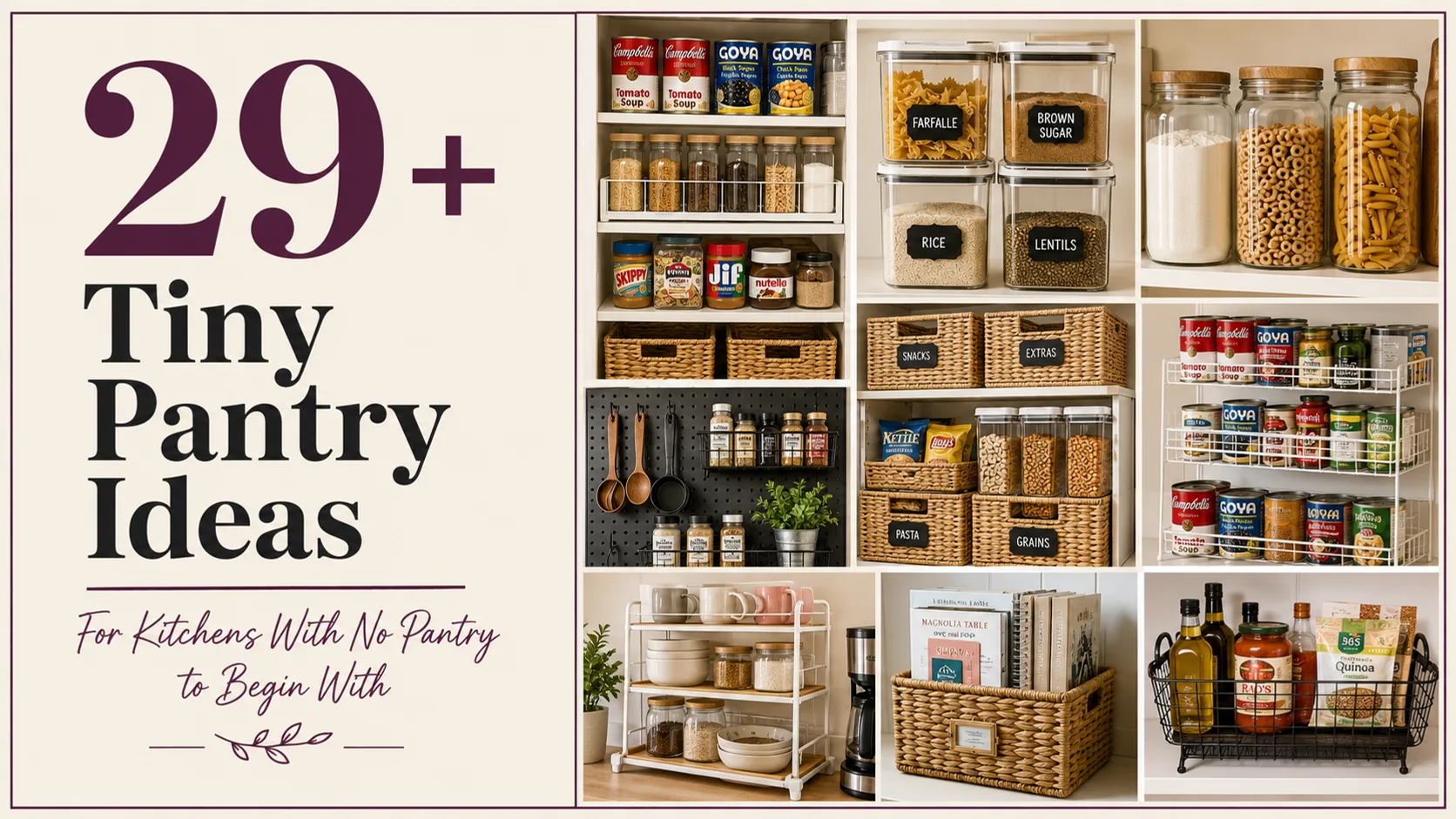
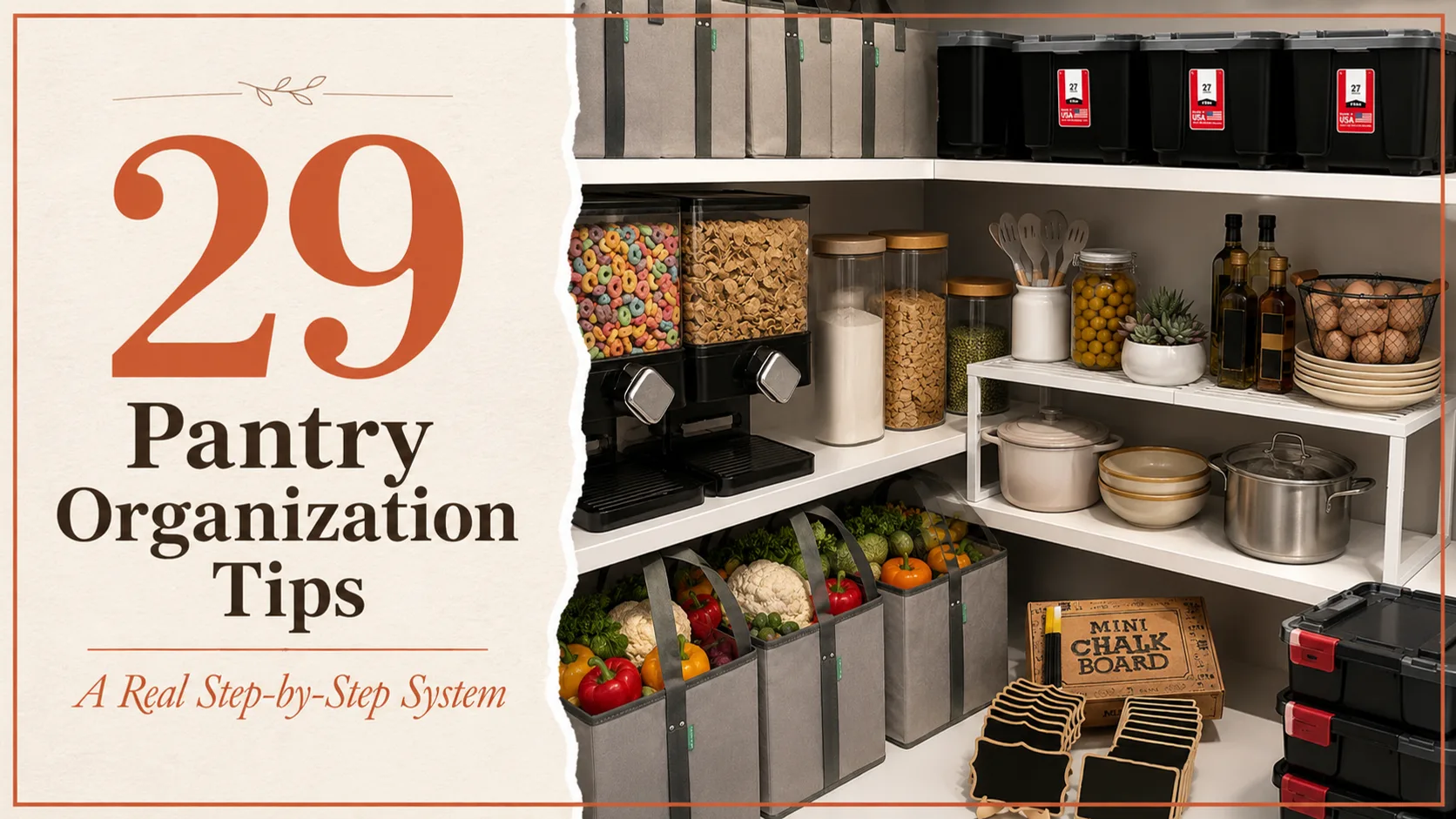
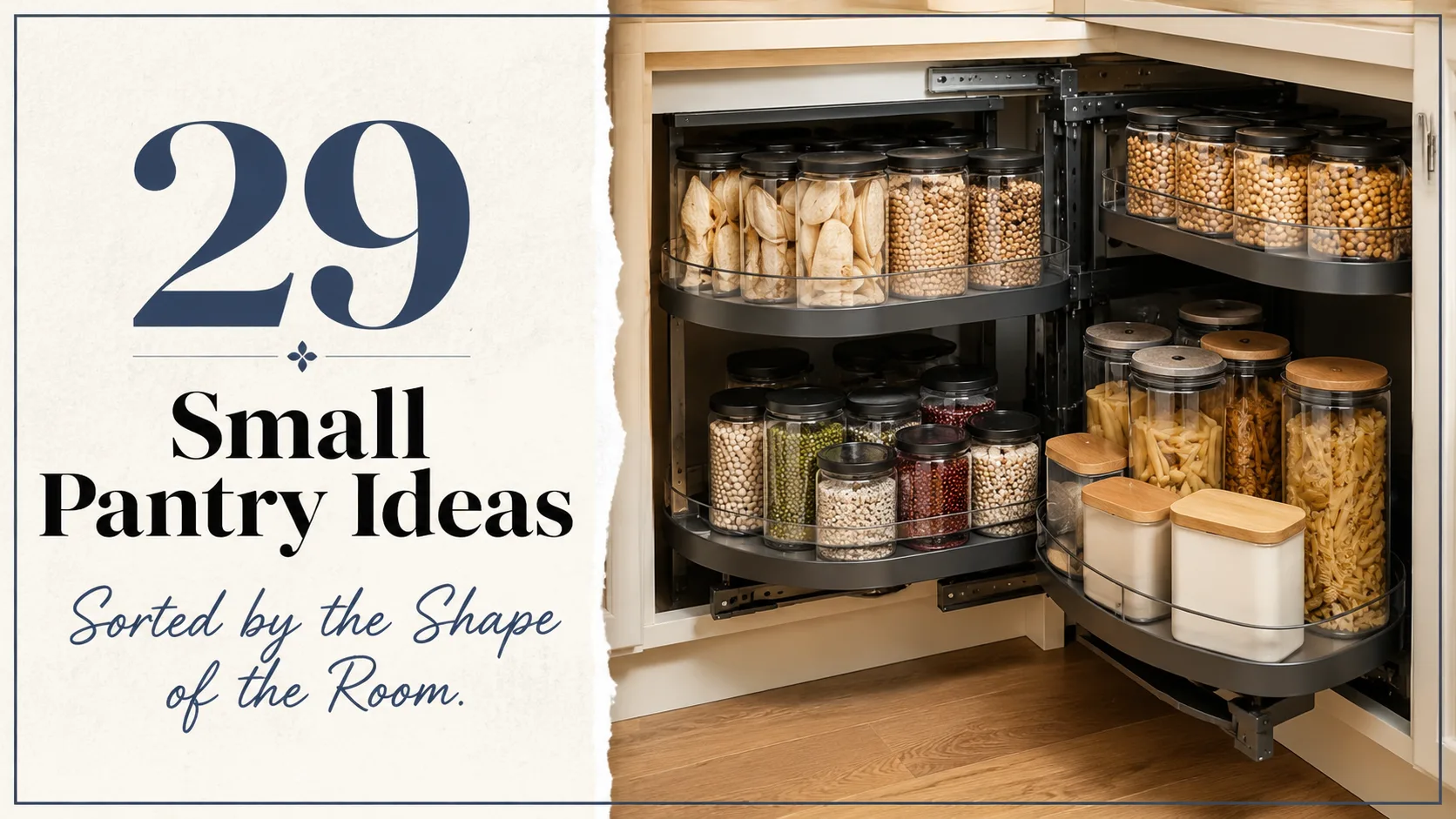
The Small Pantry Organization Ideas guide covers the door and walls a tight pantry relies on, Small Pantry Ideas sorts fixes by the room's actual shape, Pantry Organization Tips walks through the process in order, Tiny Pantry Ideas covers kitchens with no pantry at all, and the full Kitchen Organization Ideas guide covers the rest of the kitchen.
Reaching the Back
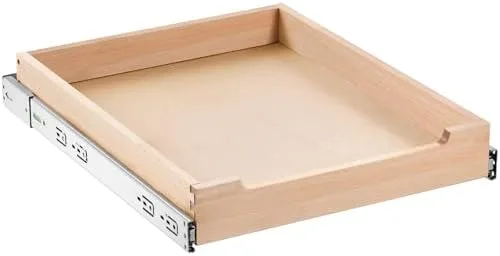
Slide a Whole Shelf's Contents Toward You Instead of Reaching Into the Dark
Best for: a deep shelf where the back half might as well not exist
A shelf that runs deeper than an arm's reach turns its back half into storage you can see but can't touch. Whatever ends up there stays there, forgotten, until a real cleanout finally drags it back out.
This pull-out drawer sits on the existing shelf and slides forward on its own tracks, bringing the whole depth of the shelf with it. Nothing at the back stays hidden anymore, because the shelf comes to you instead of the other way around.
Check price on Amazon →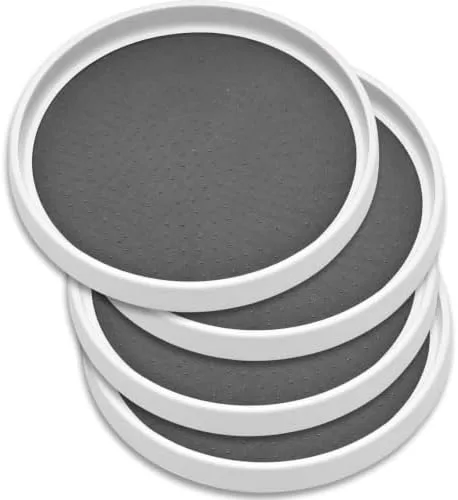
Spin the Back of a Deep Shelf Into View Instead of Reaching Blind
Best for: a deep corner shelf where the back gets found by feel, not sight
On a deep shelf, the stuff at the back doesn't just get harder to reach, it gets harder to even see. You end up patting around blind for a jar you know is back there somewhere.
A turntable spins the whole shelf's contents around to face you, so the back rotates into view instead of staying out of sight. Whatever you need comes to the front on its own, no digging required. Spin it back when you're done and the next thing you reach for is already facing forward.
Check price on Amazon →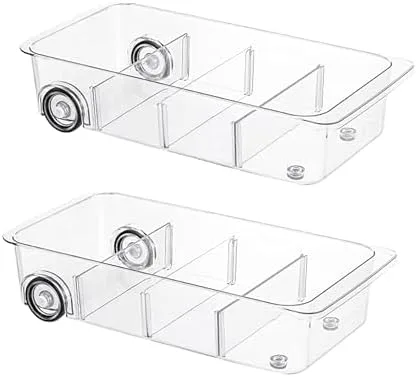
Roll a Bin Out From the Back of a Deep Shelf Like a Drawer
Best for: small items that get lost in the back third of a deep shelf
Small stuff, packets, spice jars, snack bags, is the first thing to disappear on a deep shelf, since nothing about a flat surface stops it from sliding backward. Once it's past arm's length, it's effectively gone until the next cleanout.
This bin rolls on its own wheels, so pulling the front edge brings the whole thing forward. Whatever's loaded in the back rides along with it instead of staying stuck where you left it.
Check price on Amazon →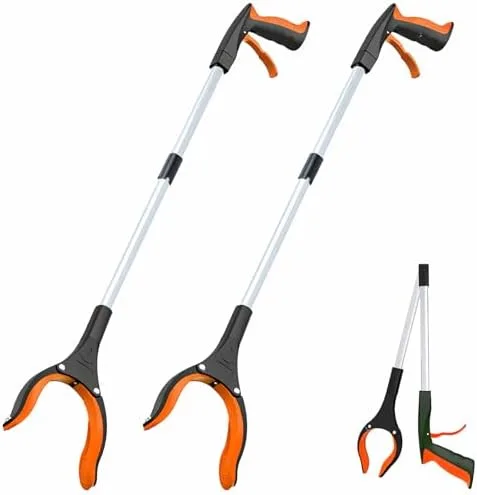
Reach a Shelf a Foot Deeper Than an Arm's Length With a Tool Built for It
Best for: the one can that always ends up just past where your hand can reach
Every deep pantry has a dead zone, the last several inches at the very back where your hand doesn't reach without climbing onto the shelf below it. That's usually exactly where the item you need has rolled.
A grabber tool with a long enough reach closes that gap without any climbing or shelf rearranging. Squeeze the handle, close the claw around the can, and pull it forward without touching anything else on the shelf.
Check price on Amazon →Top Shelf Solutions
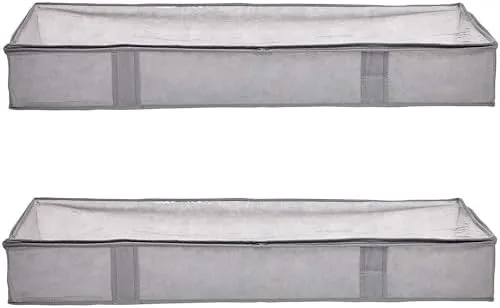
Keep Extra Linens or Table Runners Folded Flat on the Top Shelf Instead of Squeezed Into a Drawer
Best for: linens that only get used a few times a year but still need a home
Seasonal linens and table runners don't need daily access, which makes the top shelf of a deep pantry the right spot for them, if there's something to keep them from turning into a loose, sliding pile. Depth up top usually goes to waste for exactly this reason.
This flat box keeps folded linens flat and contained, sized to use the top shelf's depth instead of fighting it. Pull it down twice a year for a holiday table and everything inside is still folded the way you left it.
Check price on Amazon →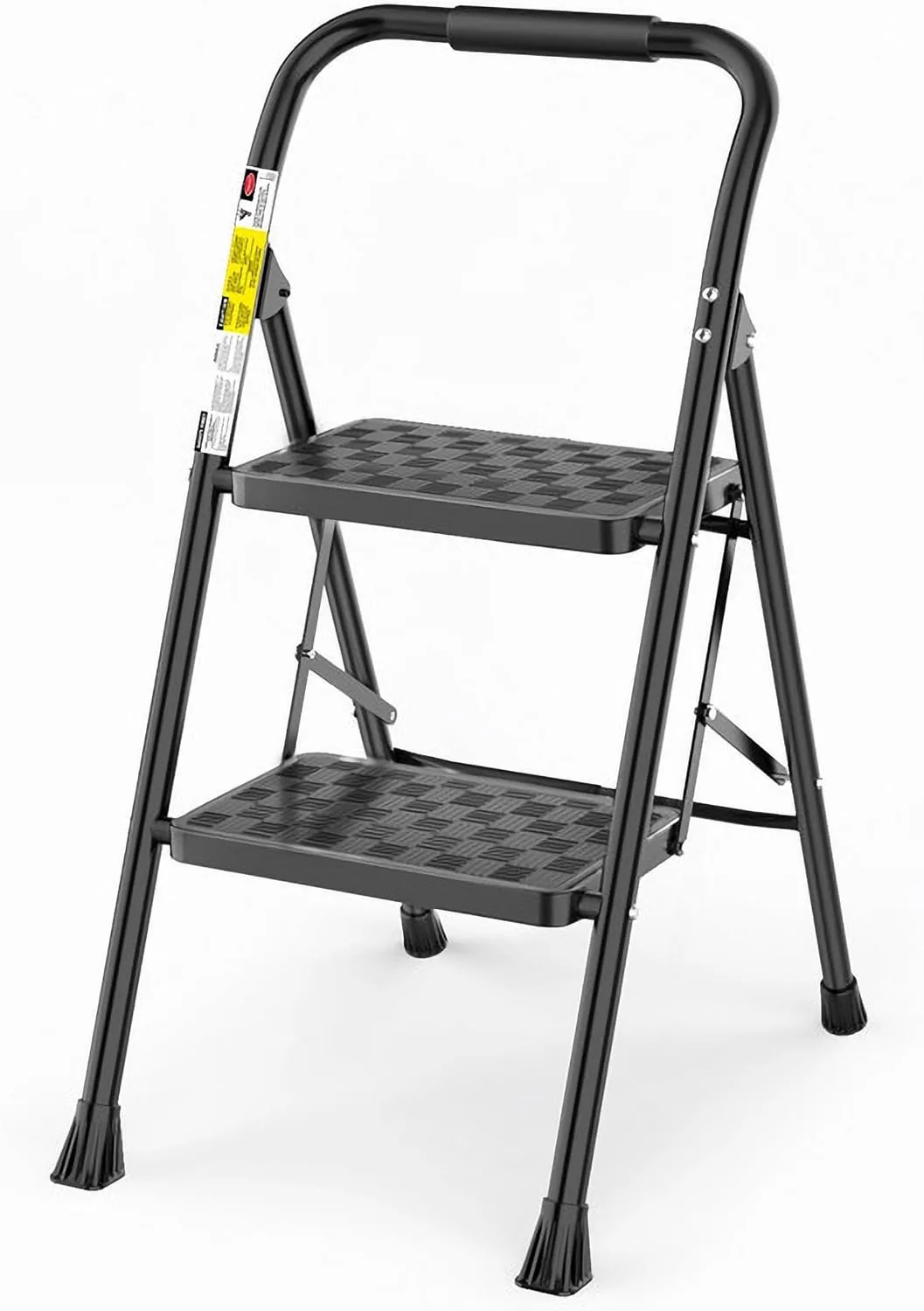
Reach a Top Shelf a Foot Too High Without Dragging a Chair Over
Best for: a top shelf that's just out of reach without something to stand on
A deep top shelf solves a storage problem and creates an access one, since anything worth putting up there is usually just high enough to need help reaching. A kitchen chair works in a pinch, but it was never built for standing on.
A folding step stool tucks flat against the pantry wall when it's not needed, then unfolds in seconds when the top shelf does. It's built to be stood on, which a chair never was.
Check price on Amazon →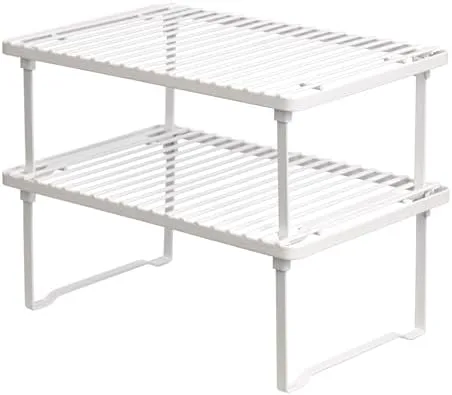
Store Extra Dishware on the One Shelf Nobody Reaches for Daily
Best for: the extra dish set that only comes out for guests
The dishes you own but rarely use, a backup set, the good bowls, holiday plates, belong on the shelf you visit the least, and a deep top shelf is exactly that spot. Stacked loose, though, they turn into a precarious tower nobody wants to reach into.
This rack splits the shelf into stable tiers so plates and bowls stack without leaning on each other. Pulling one set down for company doesn't mean risking the whole stack. Everything else stays put, even the pieces you haven't touched since last year's holiday dinner.
Check price on Amazon →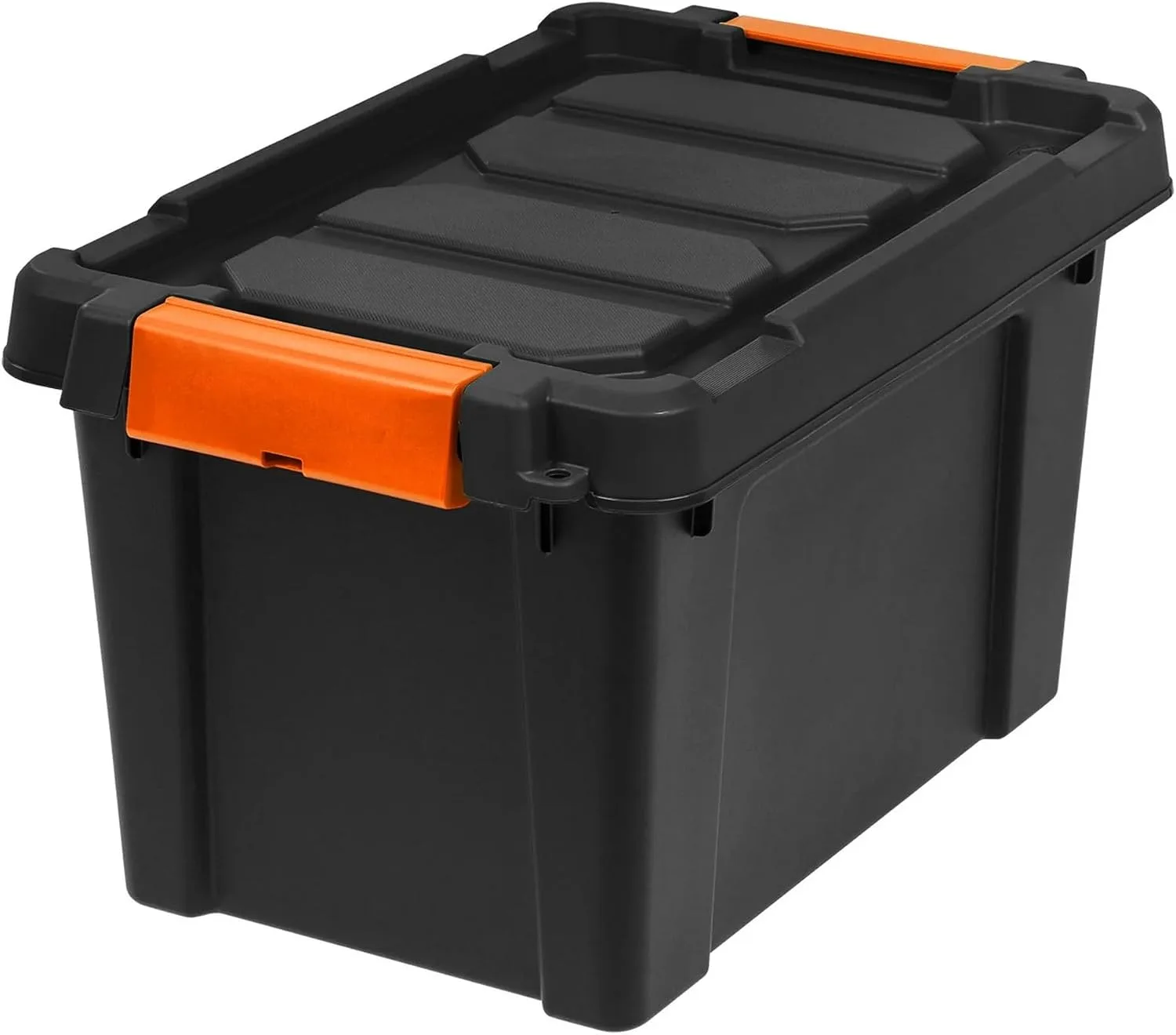
Keep Bulk Paper Goods Up Top Where the Depth Doesn't Matter as Much
Best for: a multi-pack of paper towels that doesn't fit anywhere else
Bulk paper towels and toilet paper are bulky but light, which makes a deep top shelf one of the few spots in the pantry where that depth works in your favor instead of against you. You're not reaching into it daily, so the awkward distance barely matters.
A heavy-duty tote with a lid keeps the whole bulk pack contained and dust-free up there. Slide it to the front edge when a roll runs out, and push it back when you're done.
Check price on Amazon →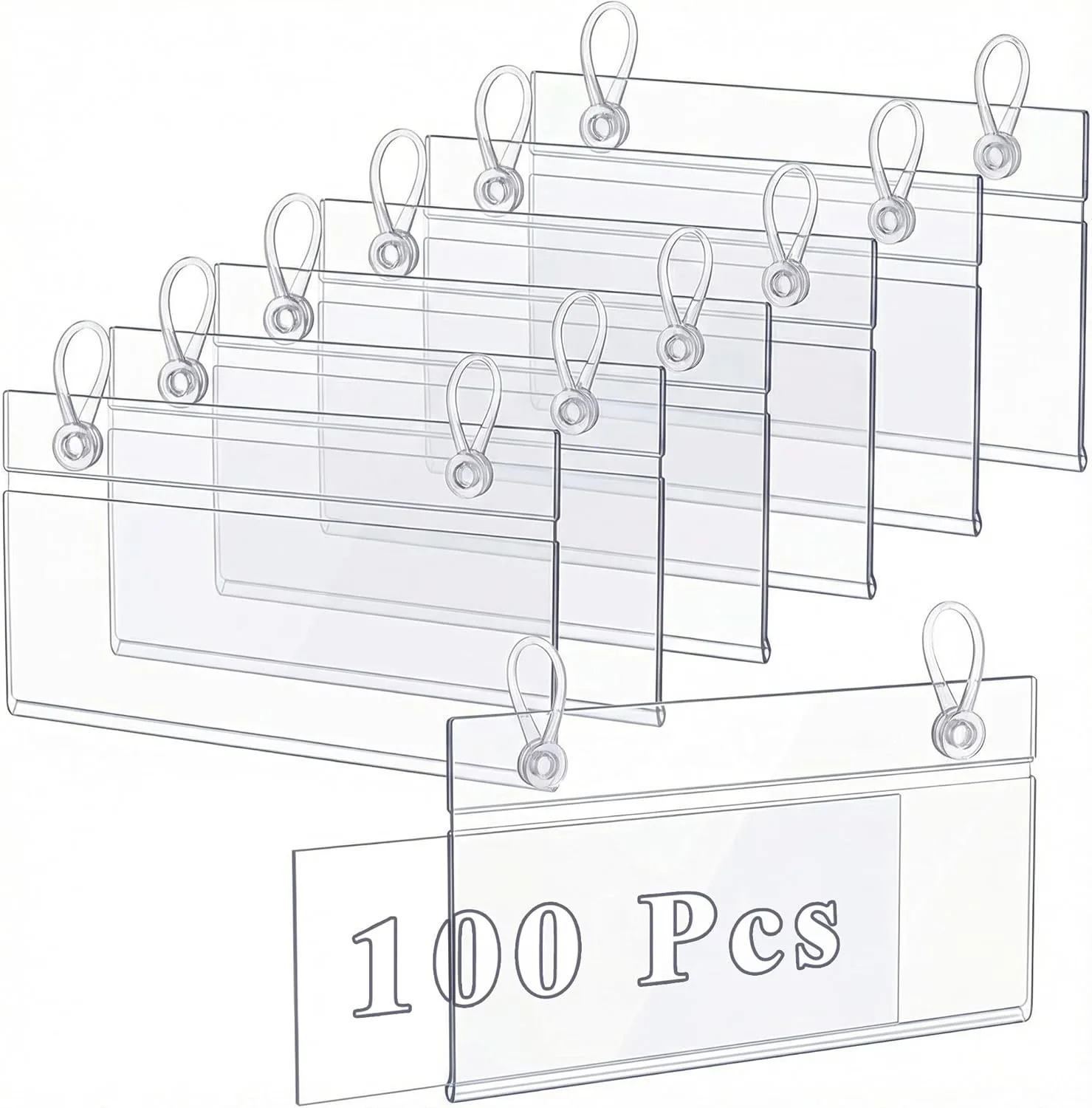
Label the Top Shelf's Contents So You're Not Climbing Up Just to Check
Best for: a top shelf you have to climb just to remember what's on it
A shelf you can barely see into from the ground is a shelf you'll forget the contents of within a month, and climbing up just to check gets old fast. That's a lot of trips for information a label could answer instantly.
These tags hang off the shelf edge at eye level, readable from the floor without any climbing at all. Glance up, read the tag, and you already know whether that box is worth pulling down.
Check price on Amazon →Middle and Eye-Level Shelf Solutions
Keep Everyday Snacks at the Exact Height a Hand Reaches Without Looking
Best for: snacks that get grabbed on the way out the door, no searching allowed
The shelf at eye level is the one spot in a deep pantry that gets used without a second thought, which makes it the right home for whatever gets grabbed fastest. Snacks belong here more than almost anything else in the kitchen.
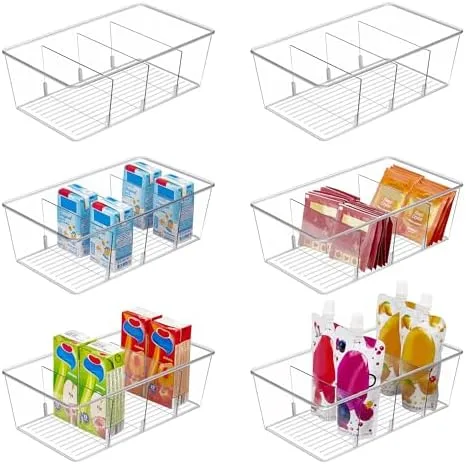
A clear bin keeps everything visible at a glance, so a hand reaching for a snack finds it without needing to look twice. Refilling it takes ten seconds at the grocery unload, and the shelf never turns into loose bags again.
Check price on Amazon →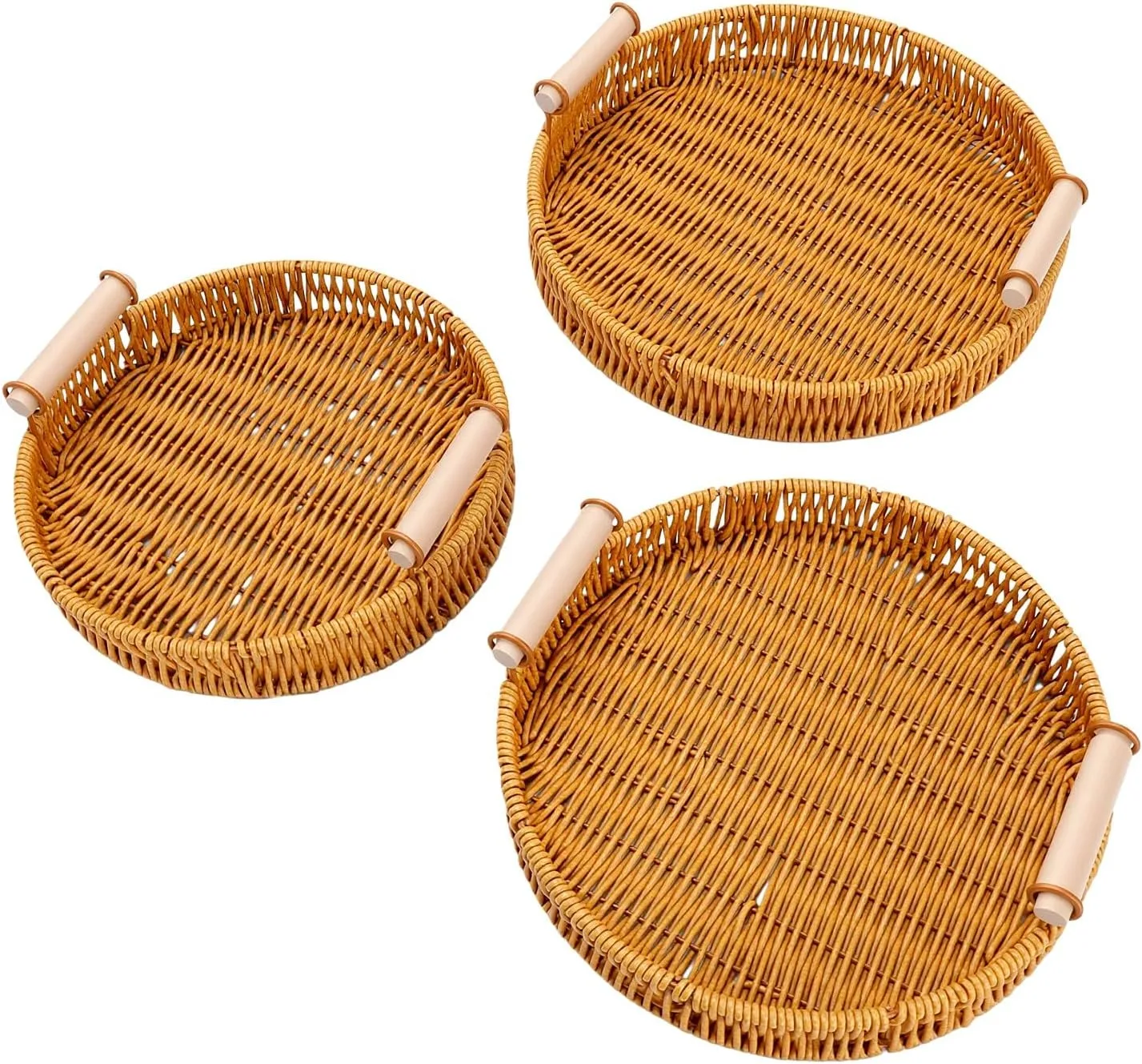
Give Breakfast Items Their Own Eye-Level Basket Instead of a Shared Shelf
Best for: cereal and oatmeal competing for room with dinner ingredients on the same shelf
Breakfast items get grabbed at the exact moment everyone's rushing to get out the door, which is a bad time to be hunting through a shelf shared with dinner ingredients. They deserve their own spot at the height people look first.
This basket pulls breakfast staples into one spot on the eye-level shelf, separate from everything else. Mornings stop starting with a search through jars that have nothing to do with cereal.
Check price on Amazon →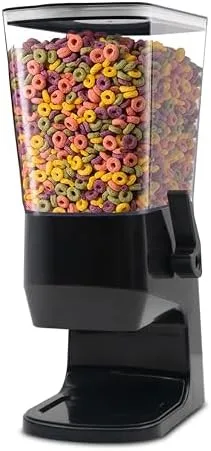
Give the Eye-Level Shelf a Cereal Dispenser Instead of a Leaning Box
Best for: a cereal box that leans sideways the moment it's half empty
A half-full cereal box gets top-heavy fast and starts leaning against whatever's next to it on the eye-level shelf, usually spilling a little more each time someone tips it upright to pour. That's a mess repeating itself every single morning.
This dispenser holds a full box's worth upright and releases it through a flip spout instead of an open flap. The shelf stays crumb-free, and the cereal stays exactly as fresh as the day it went in. Even a kid can pour their own bowl without knocking anything else off the shelf in the process.
Check price on Amazon →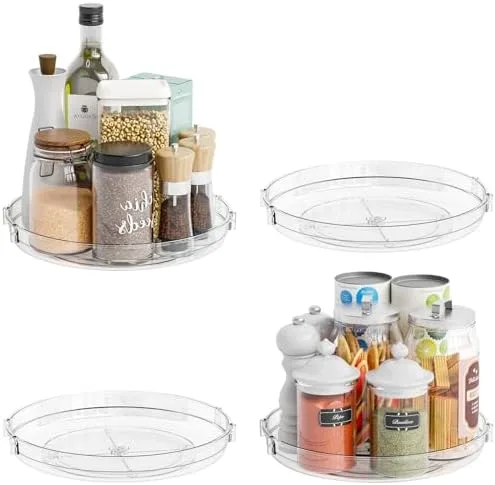
Keep the Oils and Spices Used Every Night Within Reach of the Stove-Facing Shelf
Best for: the same five bottles pulled out every night, buried behind everything else
The oils and spices that go into dinner every night don't belong deep in the pantry with the backstock, they belong front and center on the eye-level shelf where a hand can find them mid-recipe. Anything less and dinner prep turns into a search.
This organizer keeps the regulars grouped and visible on a clear tray, pulled forward instead of pushed to the back with everything else. The five bottles in heaviest rotation stay exactly where your hand expects them.
Check price on Amazon →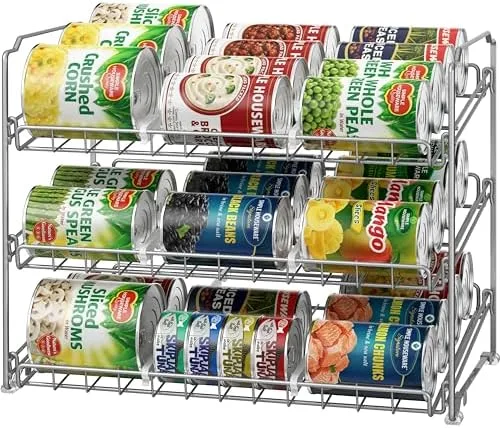
Sort Canned Goods Into Their Own Eye-Level Row Instead of a Leaning Stack
Best for: a stack of cans that topples the moment one gets pulled from the bottom
A loose stack of cans looks fine right up until someone pulls one from the bottom, and then the whole pile comes down at once. On a deep shelf, that usually means chasing a rolling can into the back third you can't even reach.
This rack holds cans in rows that release one at a time from the front, so grabbing dinner doesn't risk the rest of the stack. Everything behind it stays exactly where it was stacked.
Check price on Amazon →Lower Shelf and Floor Level
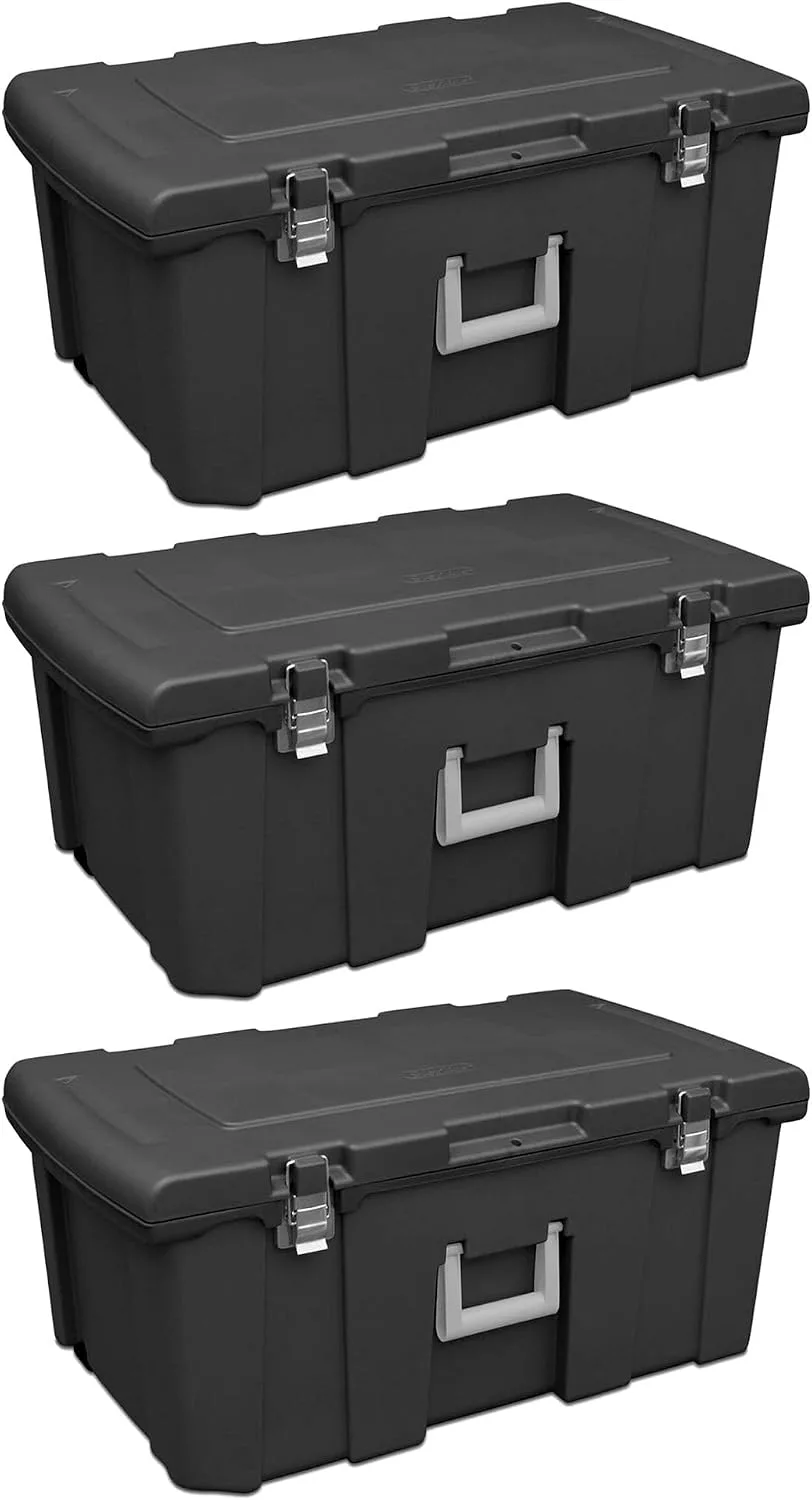
Store Bulk Water Bottles or Cases Low Instead of Straining a High Shelf
Best for: a case of water that's too heavy to lift onto any shelf
Water cases and other heavy bulk buys have no business on a shelf above waist height, since lifting that much weight overhead is how backs get strained and shelves get overloaded. The floor is the honest answer for anything this heavy.
A heavy-duty floor bin holds the weight at ground level where lifting isn't part of the job. Slide a bottle out from the front instead of hoisting the whole case down from above. Your back never has to enter the equation.
Check price on Amazon →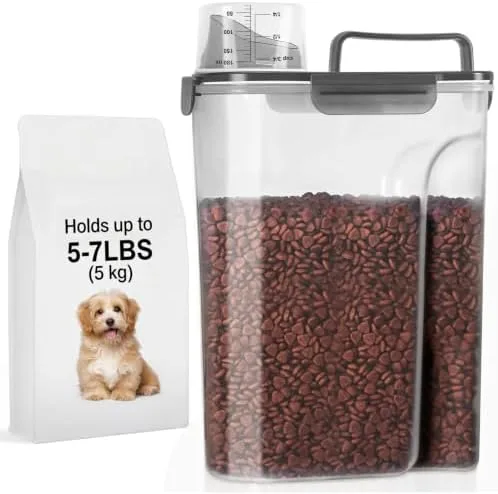
Give Pet Food the Bottom Shelf Instead of a Bag Propped in the Corner
Best for: a heavy bag of kibble that's easiest to store low and easiest to spill low too
Pet food is heavy enough that the bottom shelf makes sense on weight alone, but a torn paper bag propped in the corner down there is an open invitation to pests and stale kibble. The lowest shelf deserves better than a bag that's already falling apart.
This bin seals the whole bag inside an airtight container built to sit right at floor level. The scoop lives inside the lid, so feeding time never means wrestling a bag flap again.
Check price on Amazon →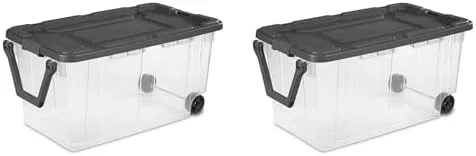
Roll Heavy Bulk Buys Out From a Low Shelf Instead of Lifting Them
Best for: bulk buys on the bottom shelf that require a full crouch and a lift to reach
Anything stored on the lowest shelf of a deep pantry usually means crouching down and lifting it out by hand, which gets old fast when the item in question is a case of canned goods. The floor level shouldn't require a workout just to access.
This bin rolls on its own wheels, so the whole thing slides forward on the floor instead of getting lifted out. Bend down, roll it out, grab what you need, and roll it back.
Check price on Amazon →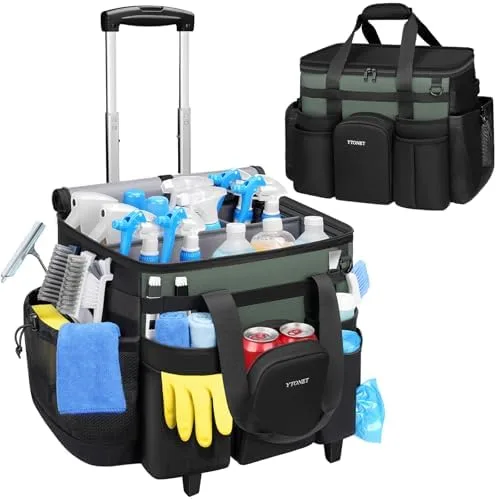
Corral Cleaning Supplies or Extra Dish Soap on the Low Shelf Nobody Minds Bending For
Best for: cleaning bottles rolling loose on the bottom shelf
Cleaning supplies are one of the few pantry items nobody minds bending down for, which makes the low shelf the natural spot for them, as long as the bottles aren't rolling around loose down there. Loose bottles tip over and leak more than anyone would like to admit.
This caddy keeps sprays and extra soap upright and grouped in one carryable container. Lift the whole thing out for a deep clean, then set it right back on the low shelf when you're done. Nothing rolls, nothing tips, and nothing leaks onto the shelf underneath it.
Check price on Amazon →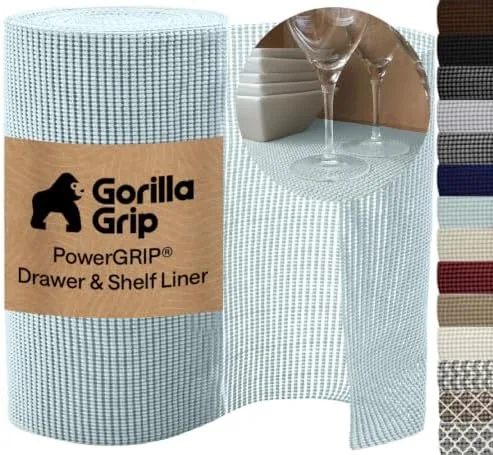
Line the Bottom Shelf So a Spill Doesn't Ruin the Shelf Underneath
Best for: a sticky ring on the bottom shelf that never fully wipes away
The bottom shelf takes the brunt of every spill in a deep pantry, since gravity sends anything that leaks or breaks straight down to it. Left bare, that shelf ends up permanently sticky no matter how often it gets wiped.
This liner catches the mess before it reaches the actual shelf surface underneath. Peel it up, rinse it off, and the spill is gone instead of soaked in.
Check price on Amazon →Front-to-Back Layering
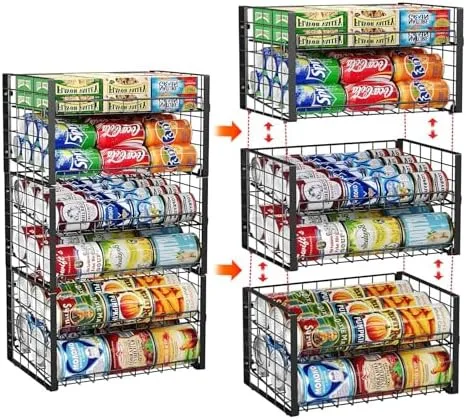
Put Short Containers in Front and Tall Ones Behind So Nothing Blocks the View
Best for: a tall box up front hiding everything shorter behind it
A deep shelf punishes bad layering fast, since one tall box parked up front is enough to hide everything shorter sitting behind it. The shelf isn't the problem, the order things sit in is.
This rack steps down in height from back to front, so tall cans stay in the rear tier and short ones sit visible up front. Nothing blocks anything else, no matter how deep the shelf runs. You see the entire contents in one glance instead of moving boxes to find out what's back there.
Check price on Amazon →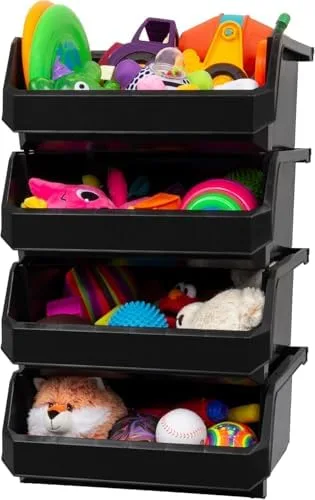
Stack a Short Bin in Front of a Deep One Instead of Letting It Swallow What's Behind It
Best for: a single deep bin that swallows everything and shows nothing
One long bin that runs the full depth of a shelf looks efficient until you need something from the back of it, and then it's just a black hole you're digging through elbow-deep. Depth without divisions is just wasted visibility.
These bins stack and nest so a shorter one sits up front while a deeper one holds the back two-thirds. You see what's in the front bin at a glance, and pulling it forward reveals exactly what's stored behind.
Check price on Amazon →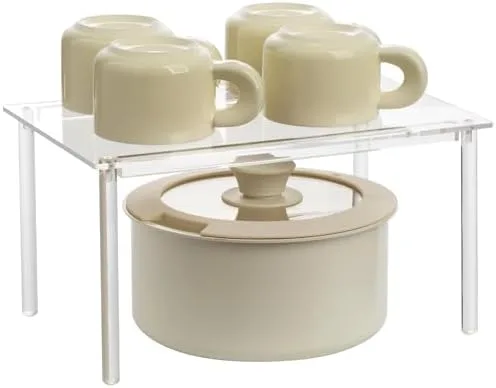
Build Two Rows Out of One Shelf's Depth Instead of One
Best for: a deep shelf holding one row of items when it could hold two
A deep shelf has enough front-to-back room for two full rows of items, but it usually only ever gets used as one long row because nothing splits the depth into separate tiers. That's half the shelf's real capacity going unused.
This riser sits on the existing shelf and creates a second level above the first, using the depth instead of just the height. Mugs or bowls sit up top while a second dish or container fits underneath, and both rows stay visible from the front.
Check price on Amazon →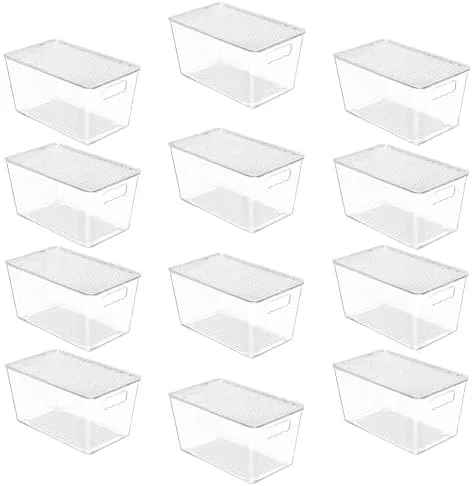
Store Backstock Behind the Open Box of the Same Item Instead of on a Separate Shelf
Best for: an open box of pasta with three unopened backups scattered across other shelves
Backstock of the same item usually ends up scattered across whatever shelf had room when it was bought, which means checking three different spots before you know how much pasta is left in the house. It should live with the open box, not away from it.
These containers stack so the open one sits in front and sealed backstock lines up directly behind it. Running low means glancing at the container behind the first one instead of searching the whole pantry.
Check price on Amazon →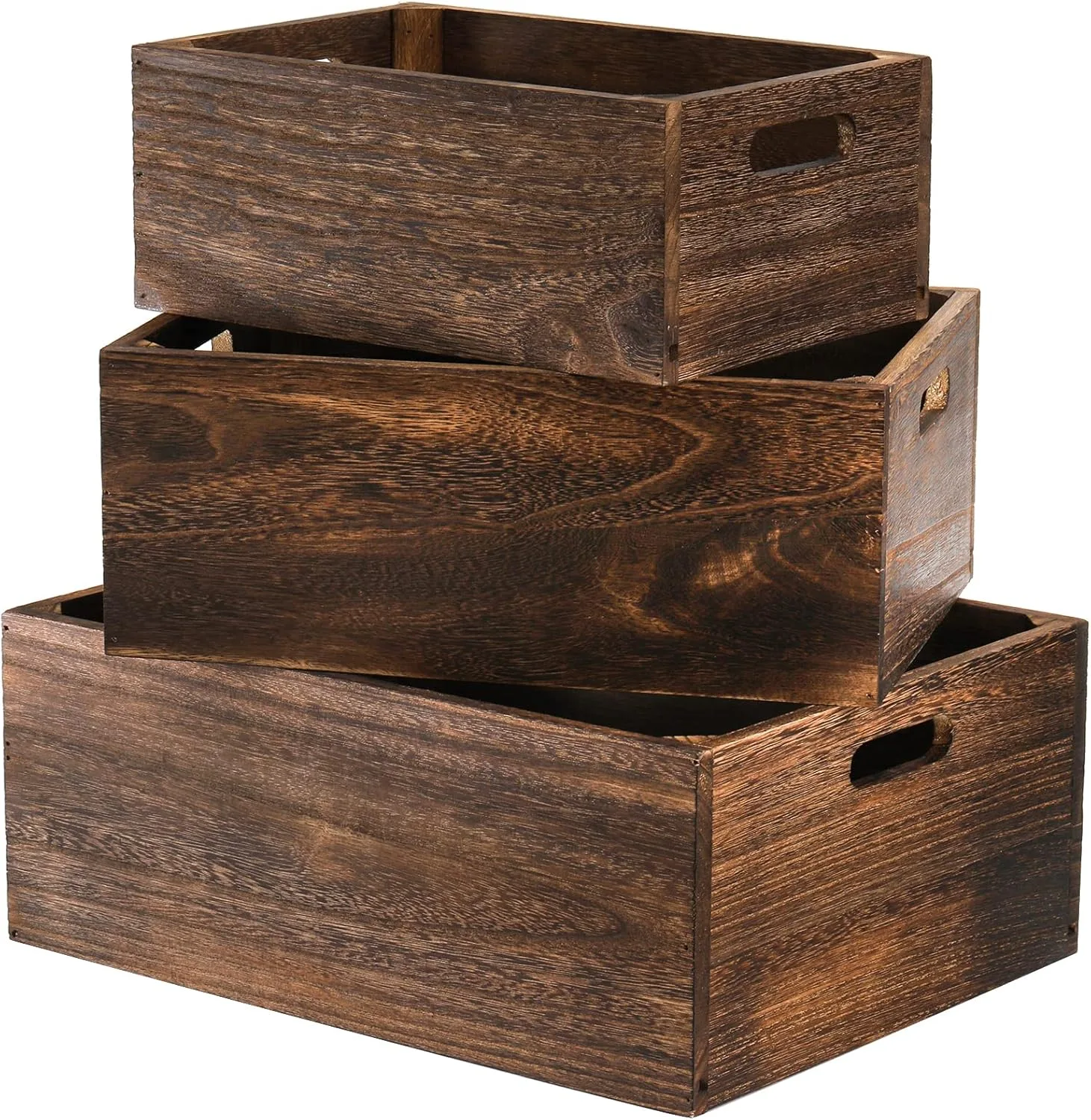
Keep a Shallow Bin Up Front for Grab-and-Go Items and a Deep One Behind for Backstock
Best for: grab-and-go snacks buried behind bulk backstock on the same shelf
A deep shelf works best when the front few inches handle daily grabs and the rest handles backstock, but shelves rarely split that way on their own. Everything just gets pushed in until the whole depth looks the same.
This set nests a shallow bin in front of a deeper one, so grab-and-go items sit within easy reach while backstock rides further back in its own container. The two jobs finally live in two separate spots instead of one crowded row.
Check price on Amazon →FAQ
How do you organize a deep pantry shelf so nothing gets lost in the back?
Pull-out drawers, lazy Susans, and rolling bins all bring the back of the shelf forward instead of asking you to reach into it. A grabber tool works as a backup for anything still stuck out of reach.What's the best way to use a deep top shelf?
Store items that don't need daily access, flat storage boxes for linens, backup dishware, or bulk paper goods, since the height and depth matter less when you're not up there often. A folding step stool and hanging labels make the shelf usable without constant climbing.How do you keep a deep shelf from wasting space front to back?
Layer it deliberately, short containers in front and tall ones behind, or a shallow bin up front with a deeper one behind it for backstock. A shelf riser can also split the depth into two visible rows instead of one.What belongs on the bottom shelf of a deep pantry?
Heavy bulk buys, pet food, and cleaning supplies all do well low, since that's the shelf nobody minds bending for and the one that can handle real weight. A washable liner protects the shelf itself from spills.Should the eye-level shelf be used differently than the rest of the pantry?
Yes, it should hold whatever gets grabbed most often, snacks, breakfast items, and the oils and spices used every night. Anything reached for daily belongs at the height a hand finds without looking, not buried on a deeper or higher shelf.How do you stop backstock from taking over a deep pantry shelf?
Store backstock directly behind the open item of the same product instead of scattering it across other shelves. Stackable or nesting containers make this easy by keeping the open container in front and sealed backups lined up right behind it.Final Thoughts
A deep shelf isn't one long storage problem, it's five short ones stacked front to back and top to bottom. Fix the back so nothing disappears into it, fix the top so it's not a climbing hazard, and let the middle shelf do the daily work it's already best positioned for. Handle each section on its own terms, and the depth that used to swallow half your groceries turns into the extra room your kitchen never had.