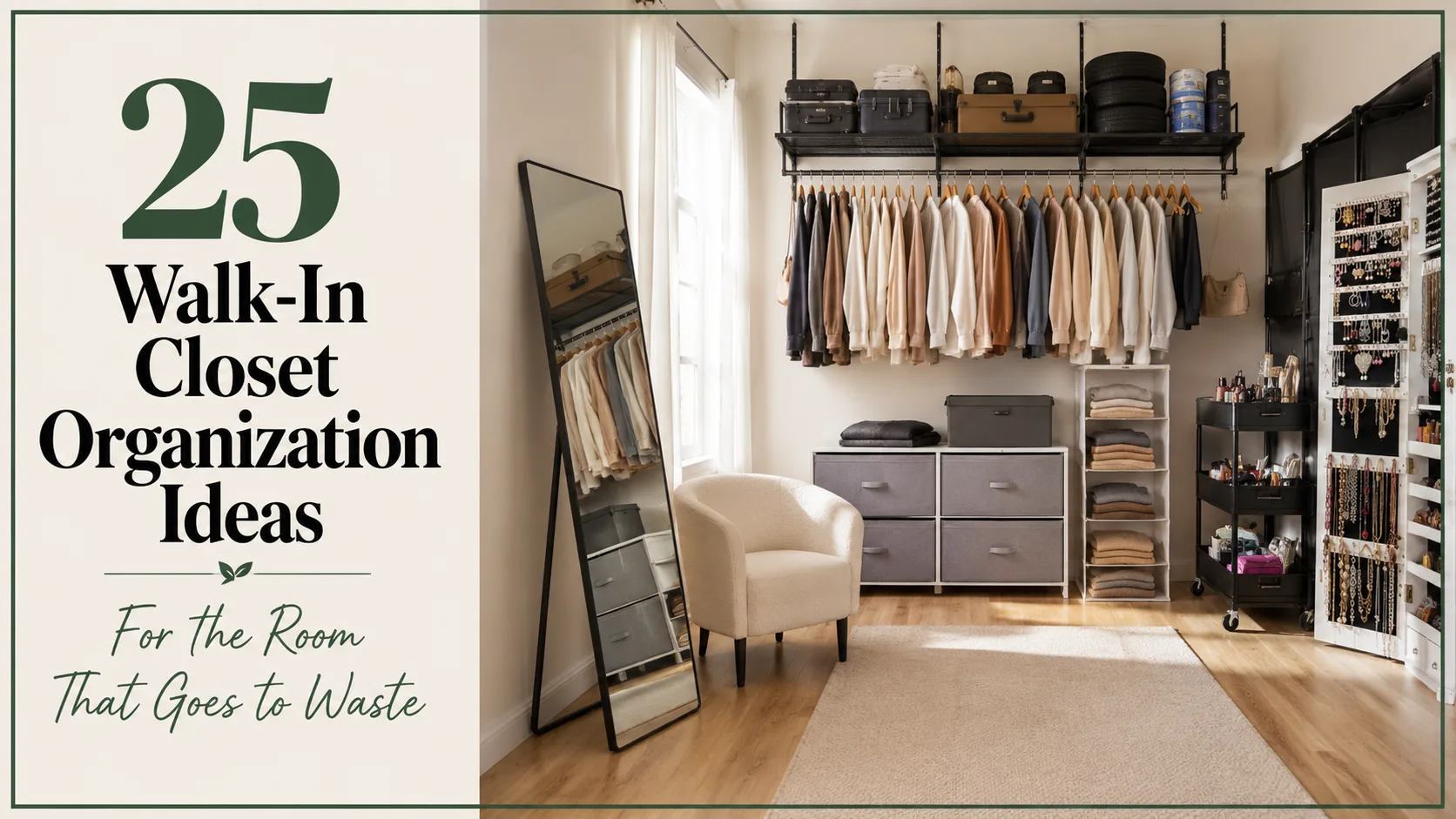
25 Small Walk-In Closet Organization Ideas for the Room That Goes to Waste
25 small walk-in closet organization ideas for lighting, zones, vertical storage, and dressing furniture. Fixes sized for a bigger closet, not a small one.

Pin this list
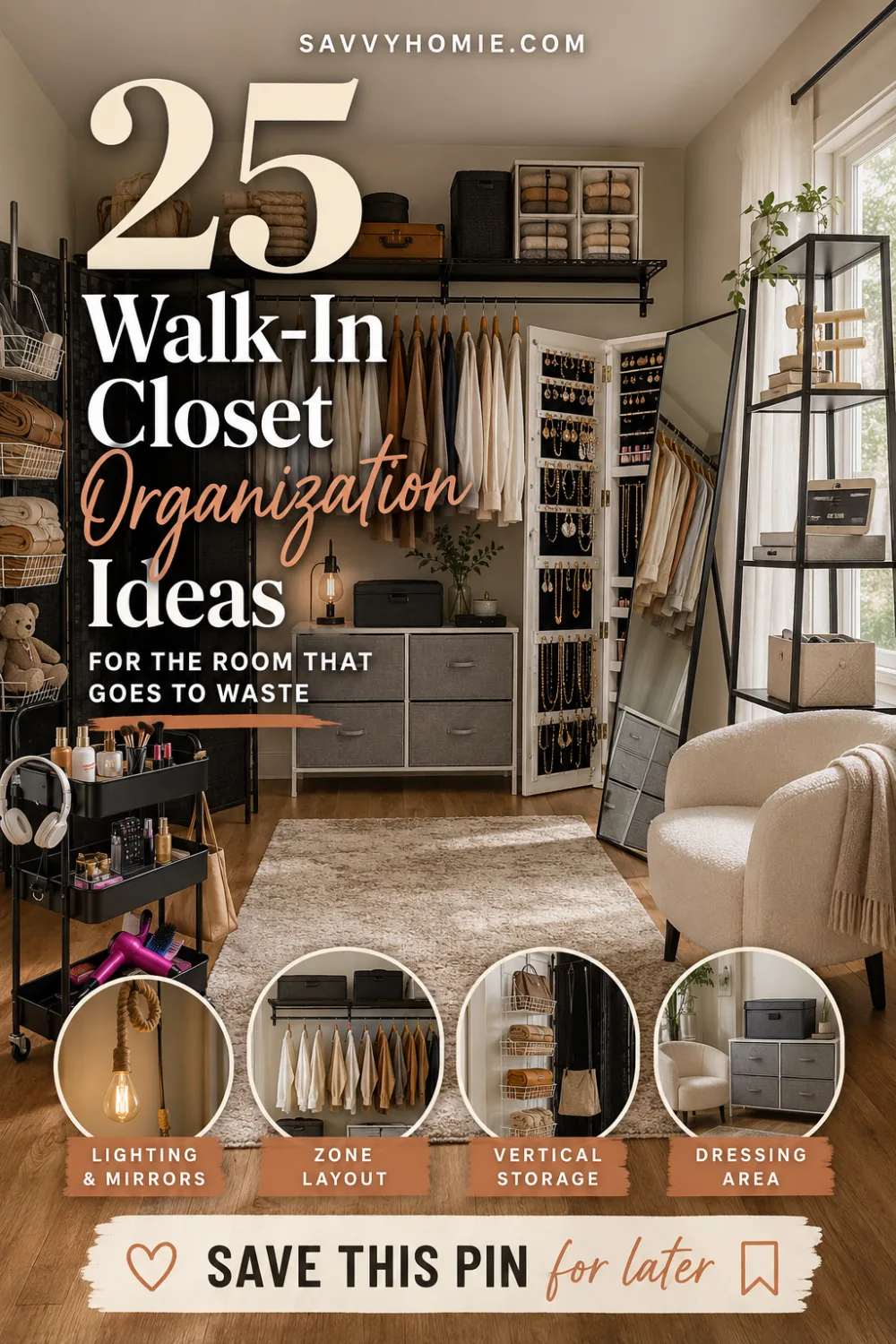
A walk-in closet gets the easy reputation. Floor room to move around in. Ceiling height a regular closet doesn't have. Enough of both to stop and pick something out instead of grabbing whatever's closest to the door. Half the time it turns into the biggest mess in the house anyway, the same piles as any other closet, just with more floor for them to spread across.
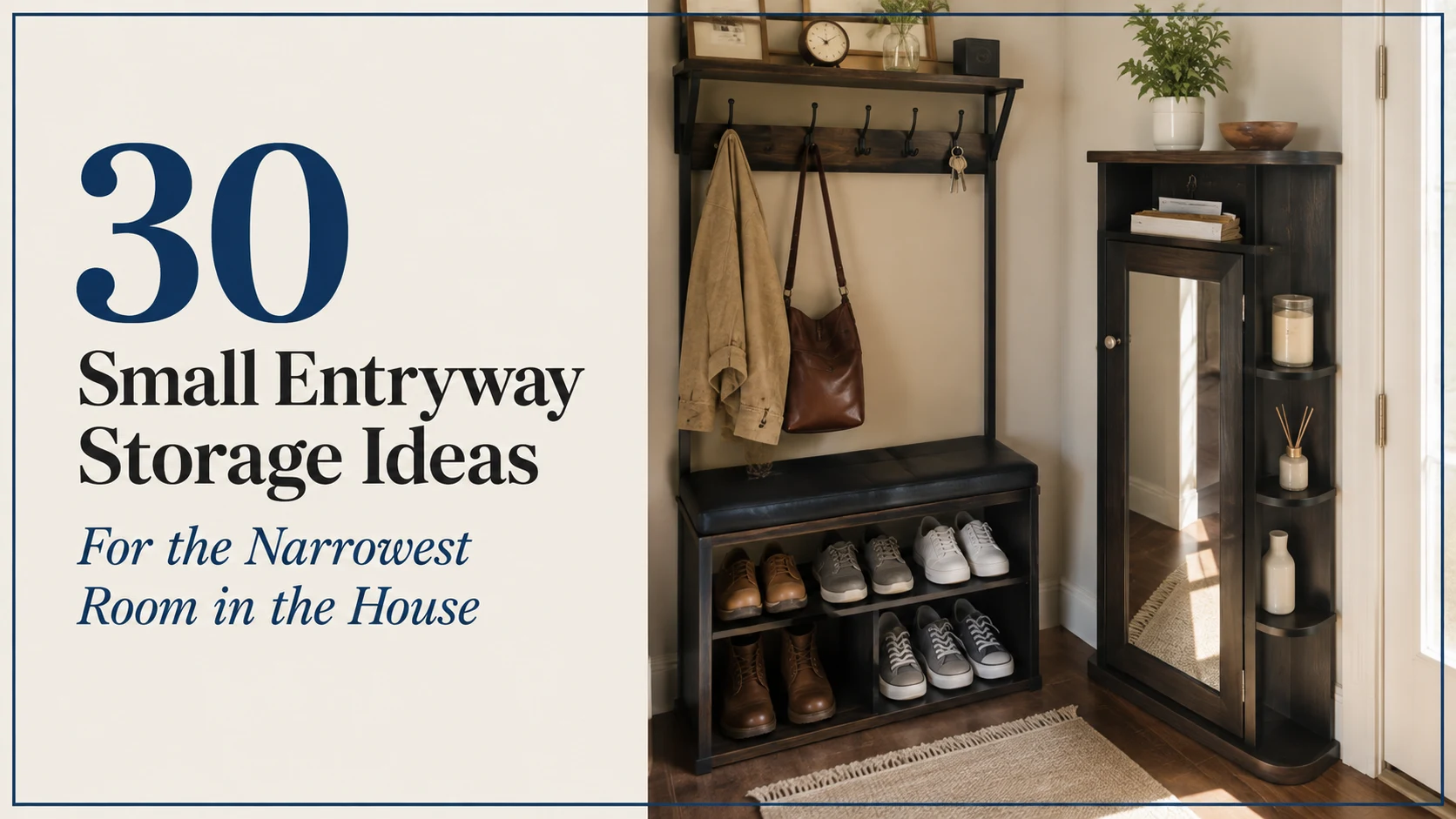
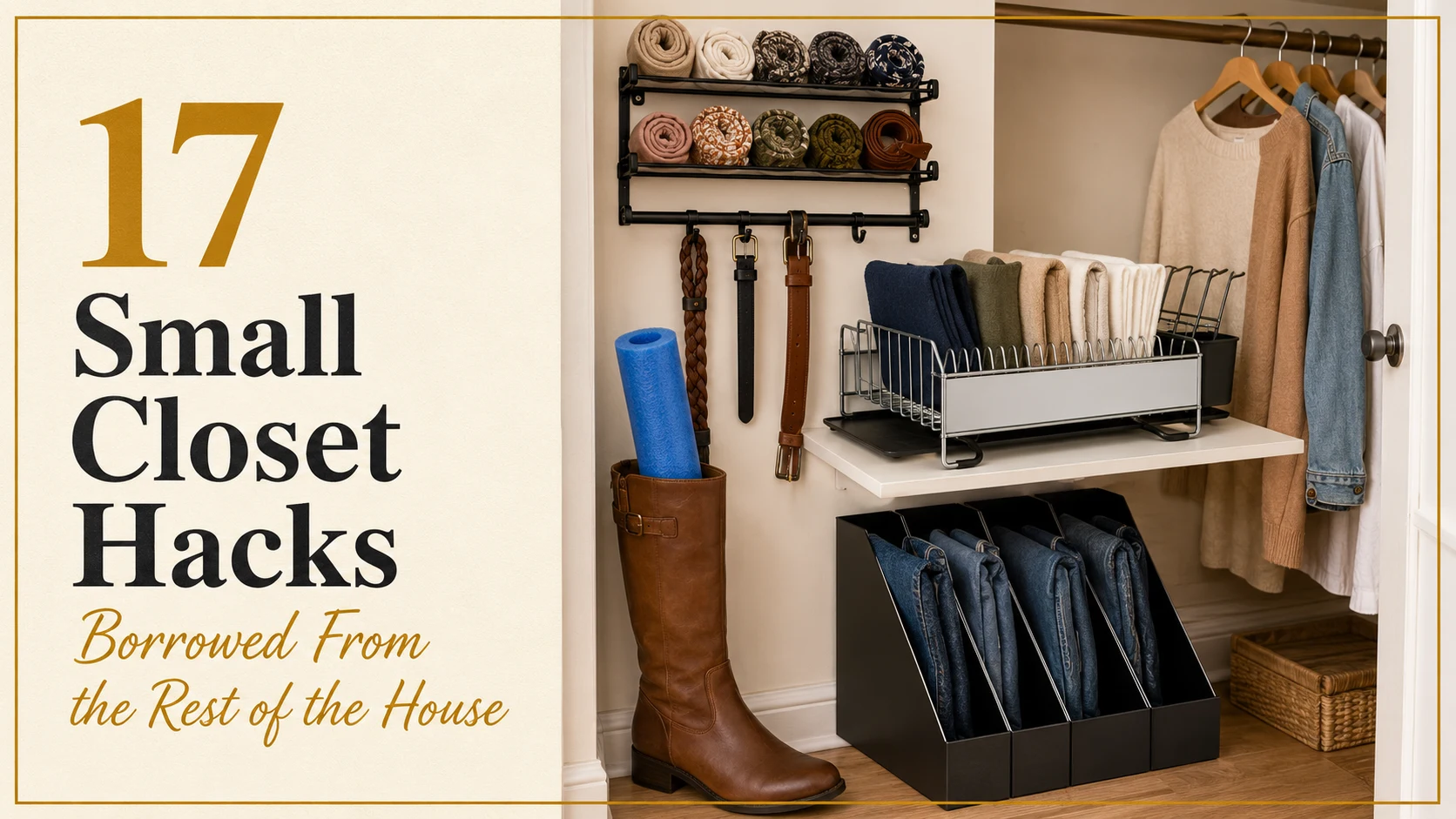
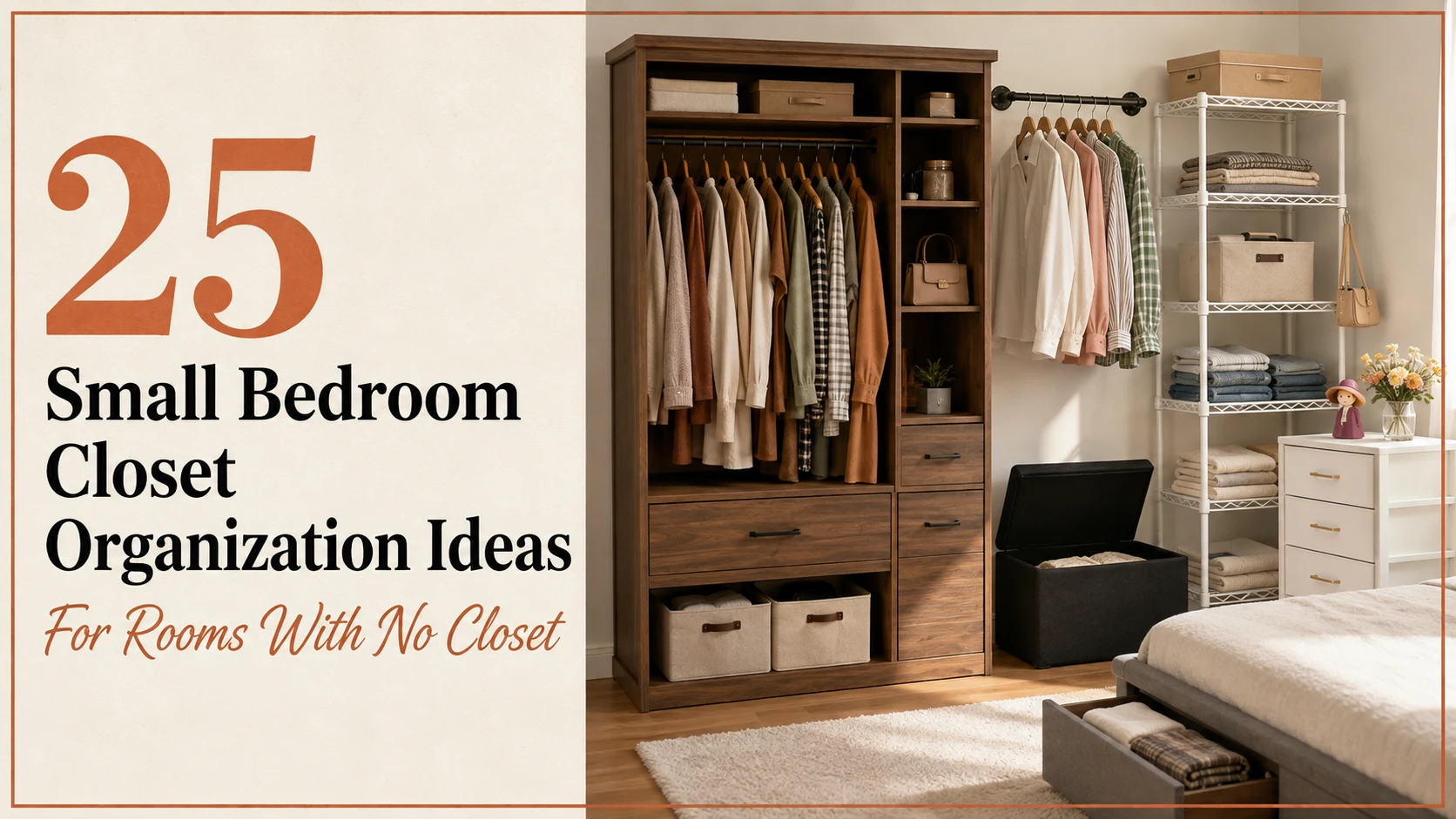
This list moves through what separates a walk-in from a glorified reach-in, not just a bigger one. Lighting comes first, since one bulb was never built to cover a room this size. Zones come next, then the ceiling height plenty of closets never touch, then furniture that finally makes the room a room, not just a bigger place to hang things. Working on a smaller closet too? Small Closet Organization Ideas and Small Bedroom Closet Organization Ideas cover the other closet sizes, Small Closet Hacks skips dedicated products entirely, and Small Space Organization Ideas covers the rest.
The Light a Walk-In Never Had
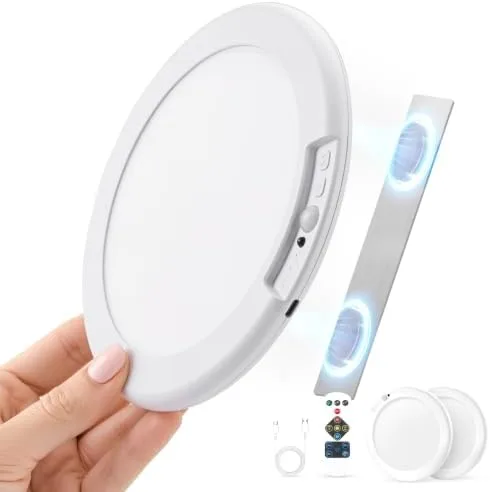
Light Up the Shelves Instead of Relying on One Overhead Bulb
Best for: shelves that go dim and shadowed no matter how bright the one overhead bulb is
One bulb in the ceiling lights the middle of a walk-in and leaves every shelf in its own shadow. Whatever's folded up top might as well be invisible.
Stick these puck lights under each edge and switch them on with the included remote, no wiring, no electrician needed. No Saturday lost to a project that was supposed to take twenty minutes either. Every shelf finally gets light aimed right at it, not whatever drifts down from the ceiling, warm or daylight depending on whether the job is folding laundry or matching socks before sunrise.
Check price on Amazon →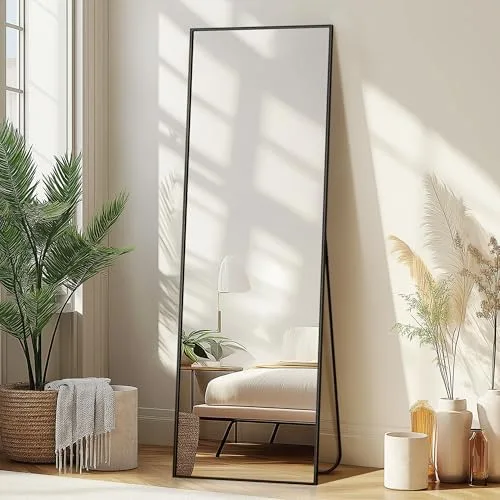
Check the Full Outfit Without Leaving the Closet
Best for: an outfit that only gets checked piece by piece in a small bathroom mirror
Bathroom mirrors only ever show one piece at a time, never the whole look together. Seeing it all at once means walking to another room and hoping nothing clashes.
Lean this floor mirror against the closet wall and check the whole outfit at once, right where it got put together. Adjustments happen on the spot instead of after a trip down the hall, and the room becomes the one spot that finishes getting dressed.
Check price on Amazon →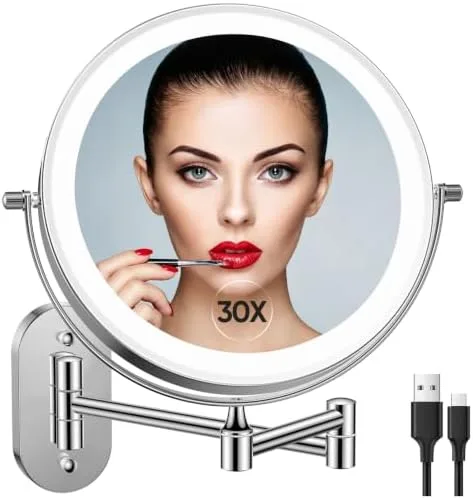
See True Color and Detail, Not a Guess Under a Dim Bulb
Best for: makeup or jewelry that looks fine in the closet and wrong the second it's outside
Closet lighting is usually built for finding clothes, not checking makeup or squinting at fine jewelry clasps. Colors read differently under it, which shows up the second whatever got applied hits real daylight.
Mount this mirror at eye level and its ring light gives a true, close-up read the closet's regular lighting was never going to manage. Flip it around for regular reflection or the magnified side for detail work, and swing it flat against the wall the second it's not needed, so it's not one more thing permanently in the way.
Check price on Amazon →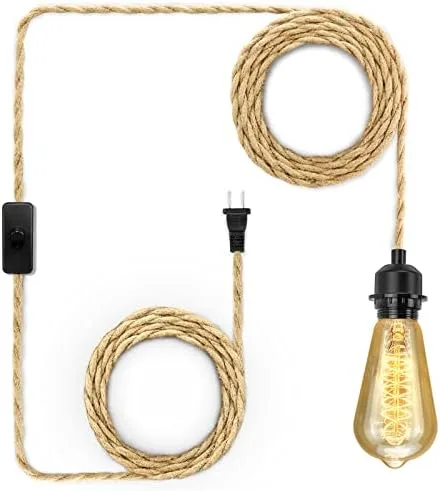
Add Light to a Closet With No Wiring in the Ceiling
Best for: a closet built with no ceiling fixture and no plan to ever add one
Some closets were never wired for a ceiling light, just whatever spills in from the door. Running new wiring for one fixture is a lot of electrician for a small room.
Hang this pendant from a hook instead and plug the cord into any nearby outlet, no wiring involved. The bulb hangs at whatever height lights the room best, and the whole thing unplugs just as easily if it ever needs to move.
Check price on Amazon →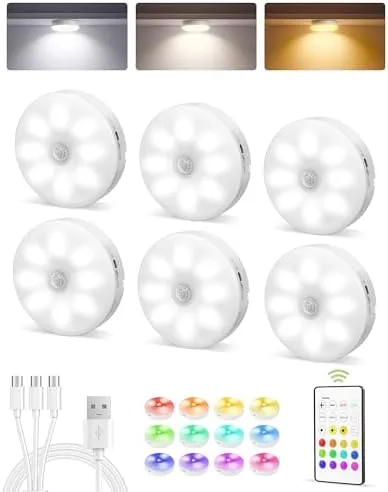
Charge It Once and Skip the Wiring Entirely
Best for: a closet with no outlet either, not just no ceiling wiring
Not every closet has a nearby outlet either, which rules out the easy plug-in fixes right along with the wired ones. That usually means living with whatever light drifts in from the hallway and calling it good enough.
Charge this one over USB like a phone, then stick it to the ceiling and forget about it. No outlet, no wiring, nothing else in the room it has to depend on. One charge lasts weeks, and it switches on with a tap instead of a search for a light switch that was never installed in the first place.
Check price on Amazon →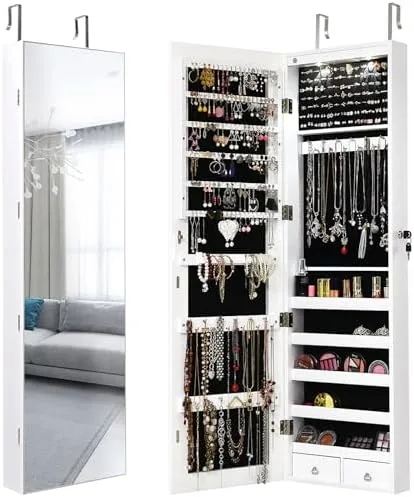
Store Jewelry Behind a Door That Doubles as a Mirror
Best for: jewelry spread across hooks, dishes, and a drawer with no mirror anywhere near it
Jewelry scattered across a hook here and a dish there means putting a piece on without ever seeing it until it's time to leave. Checking it means finding a mirror somewhere else.
Hang this cabinet on the door and its front doubles as a full mirror, with jewelry stored just inside. Put a piece on and check it in the same spot, then close it up and the whole collection disappears from view. No dish left out, no hook needed, no evidence any of it was ever a problem.
Check price on Amazon →One Room With No Borders Yet
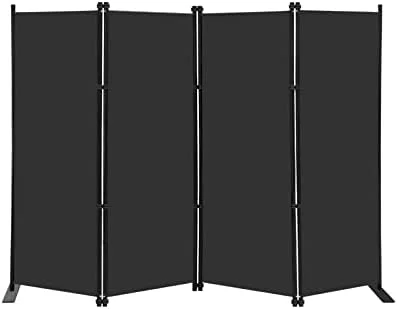
Split Hanging, Folding, and Accessories Into Their Own Sections
Best for: a walk-in with hanging, folding, and accessories all blurring into one open room
Walk-ins with no dividing lines just become one long stretch of clothes and clutter blending into itself. Nobody could point to where the hanging section ends and the folded pile starts, because there isn't a line to point to.
Stand these panels between zones and the closet suddenly has actual edges, clothes on one side of the panel, folded storage on the other. It's like someone drew a boundary and meant it. Fold a panel flat the day a zone needs to grow, and the boundary just moves with it.
Check price on Amazon →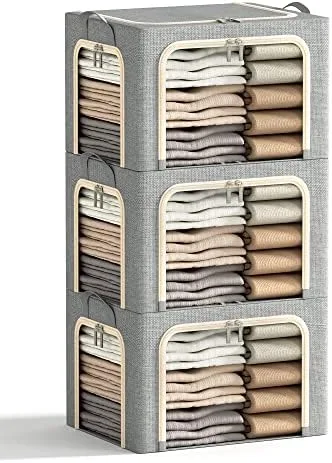
Label Each Bin So Everyone Knows Where It Goes Back
Best for: bins nobody else in the house can identify without opening every single one
Stacks of identical bins turn every closet into a guessing game, opening two or three before landing on the right one. Whoever else uses the closet never learns where anything lives either, and there's no reason they should, since nothing about an unlabeled bin invites anyone to remember it.
Slide a label into each bin's clear window and every one becomes obvious without lifting a lid. Whatever's inside gets found on the first try, and putting something away stops being a guess and starts being obvious, which is all a bin was ever supposed to do.
Check price on Amazon →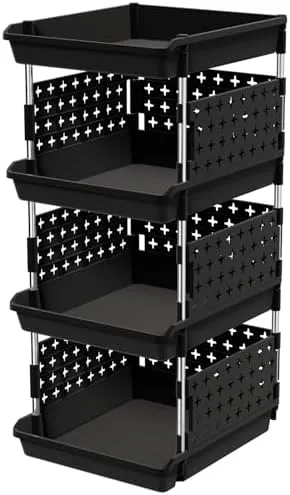
Stack Zones Instead of Letting Them Spread Across the Floor
Best for: storage that keeps spreading across the floor because nothing's built to stack
Loose bins and baskets tend to spread across the floor rather than up, eating the one thing a walk-in never has enough of. Every new one added means less room to stand in, which defeats the entire point of having a closet worth standing in.
Snap these crates together into one column and each zone gets its own tier stacked on the last. The floor keeps its footprint, which is the whole point of stacking instead of sprawling, and any crate still slides out on its own without disturbing the ones above it.
Check price on Amazon →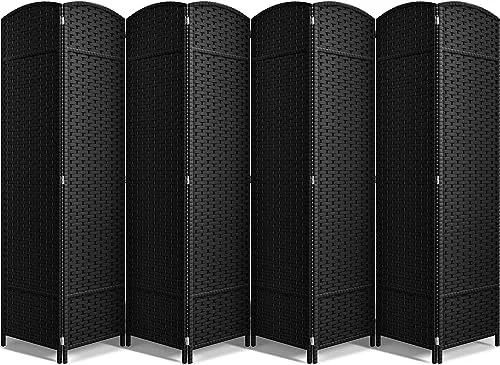
Section Off a Dressing Corner Without Adding a Wall
Best for: a walk-in with no dedicated spot to get dressed, just clothes on every side
Walk-ins surrounded by clothes on every side rarely have one clear spot to stand and get dressed. Everything's storage, and nothing's a room.
Unfold this screen across one corner and it becomes a dressing spot on its own, closed off from the racks on either side. It folds flat against the wall the moment it's not needed, so the corner it just defined goes right back to being open floor.
Check price on Amazon →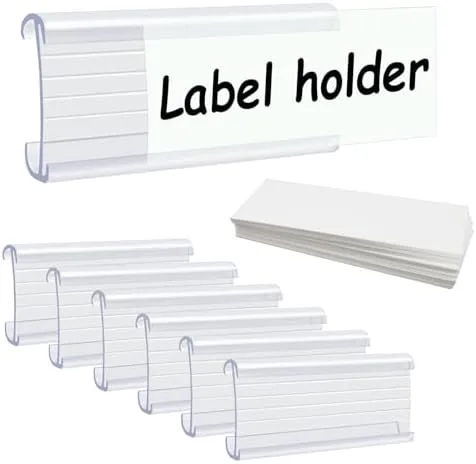
Know What's on a Shelf Without Pulling Everything Down to Check
Best for: shelves stacked high enough that checking one means pulling half of it down
Shelves packed to the ceiling mean checking the top row involves a step stool and pulling down whatever's in the way first. Half the time it's easier to just guess.
Clip one of these tags to the shelf edge instead and write the contents right on the card. A glance from the floor answers the question a step stool used to, and swapping the card takes seconds the next time that shelf's contents change.
Check price on Amazon →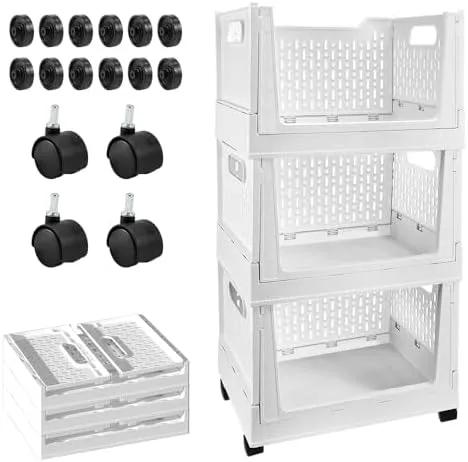
Move a Zone's Worth of Items Wherever They're Needed
Best for: a stack of items that always needs moving to wherever the light or the mirror is
Getting ready sometimes means needing a whole category of stuff wherever the light's better or the mirror is. That's rarely its usual corner.
Set that whole zone on this crate's built-in casters and roll it across the room in one trip. Everything in it arrives together instead of getting carried over armload by armload, and it rolls right back to its spot once the moment's over.
Check price on Amazon →The Height a Reach-In Never Gets
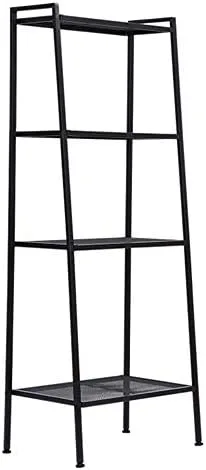
Use the Height a Walk-In Has That a Regular Closet Doesn't
Best for: shoe pairs stacked in a floor pile because there's nowhere tall enough to stand them up
Regular closets rarely have room for a tower this tall, so shoe storage there usually stays low and spreads across the floor. A walk-in has the ceiling height to use, and that height usually just sits there empty, which is a strange thing to waste in the one closet built to have some.
Stand this eight-tier tower in the one narrow gap a walk-in usually has to spare and stack pairs straight up rather than out. The floor footprint stays tiny while the shoe count climbs, and the top tier still leaves room for whatever doesn't fit a shelf at all.
Check price on Amazon →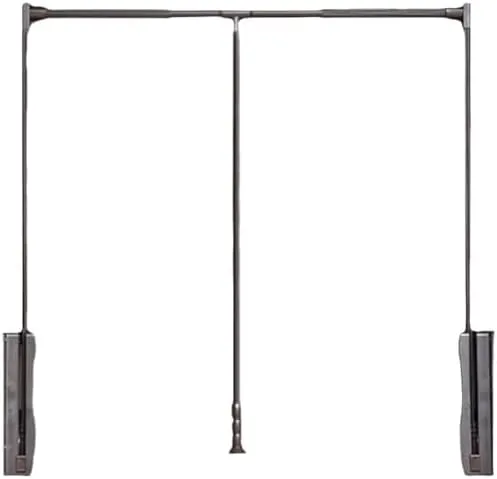
Bring a High Rod Down to Reach Instead of Grabbing a Step Stool
Best for: a second rod mounted high enough that reaching it means a step stool every time
A second rod mounted up near the ceiling adds hanging room, but only if there's a step stool handy every time something's needed off it. More often than not, it just doesn't get used.
Pull this rod down to arm level, hang or grab what's needed, then push it back up out of the way. The extra hanging room stays reachable without a stool, so the high rod stops being dead weight overhead.
Check price on Amazon →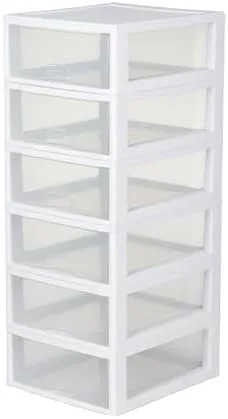
Fit a Narrow Tower Into the One Corner a Shelf Never Would
Best for: a corner too narrow for a normal dresser but too good to leave empty
Regular dressers are usually too wide for a walk-in's leftover corner, so that spot just sits empty. An open shelf would fit there, but it means folded clothes stacked loose rather than put away.
Slide this narrow six-drawer tower into that same gap and it holds nearly as much as a dresser in a fraction of the floor room. Everything gets a real drawer, not an open pile, and what used to be a dead corner earns its keep for the first time.
Check price on Amazon →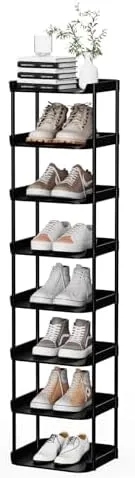
Double the Rod's Capacity Without Adding a Second One
Best for: a single rod that's already full with nowhere obvious for a second one
A packed rod doesn't leave room for a second one bolted in above or below it. Not without a tape measure and some denial about how little clearance is left.
Hang this basket column straight over the existing rod and five more tiers of storage show up without a single bracket touched. Sweaters stop fighting bags for hanger room, because now each one has a shelf that isn't also someone else's shelf.
Check price on Amazon →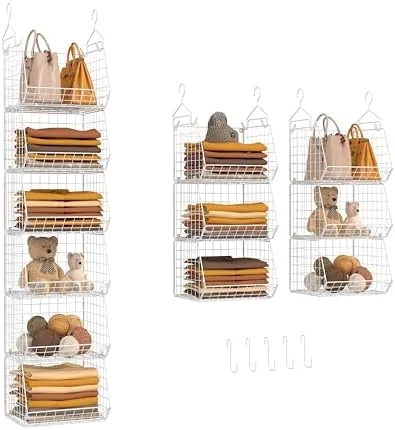
Spread Storage Across the Rod Instead of Stacking It All in One Spot
Best for: one crowded stretch of rod when the storage could be spread across several
Single hanging basket columns solve one crowded stretch of rod, but a whole walk-in usually has more than one spot that needs it. Buying several tall columns just trades one crowded spot for three, which solves nothing, just relocates the clutter.
Hang these three baskets at separate points along the rod, one over the accessories and one over the folded stack, with the third wherever else a zone needs it. Storage spreads across the room rather than piling up in one spot, and any single basket comes down without touching the other two, the entire advantage over one column doing all the work.
Check price on Amazon →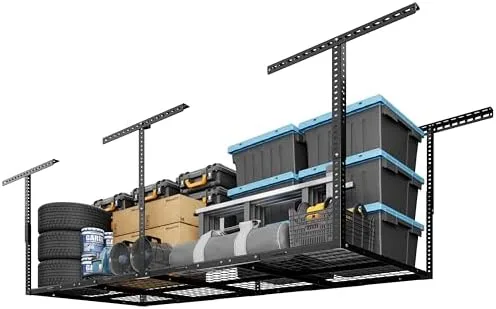
Put the Ceiling to Work for Things Reached for Twice a Year
Best for: off-season bins and rarely-used gear eating floor or shelf room year-round
Off-season bins and the gear that only comes out twice a year still take up floor or shelf room the other fifty weeks. Prime, reachable storage ends up spent on stuff nobody's touched since spring.
Mount this rack to the ceiling joists and move all of that up and out of the way for good. The floor and shelves go back to holding what's used weekly, while the twice-a-year stuff waits overhead until it's needed.
Check price on Amazon →A Corner Built for Getting Dressed
Fill the Corner With a Dresser Instead of Empty Floor
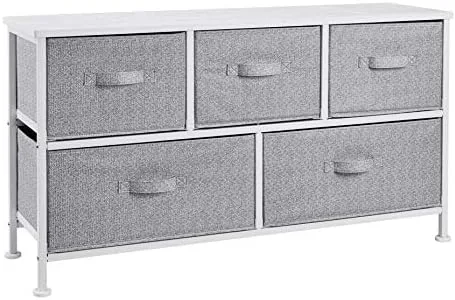
Best for: a walk-in with plenty of hanging room but nowhere to keep folded basics
Rods and shelves cover plenty of what a walk-in needs. Folded basics are the exception, and pretending a closet doesn't need a dresser just because it has rods is how sock drawers end up as floor piles.
Set this five-drawer piece against the one open wall and those folded basics land inside the closet for good, not on a trip to another room. Getting dressed stops meaning a stop somewhere else first, since everything's now under the same roof.
Check price on Amazon →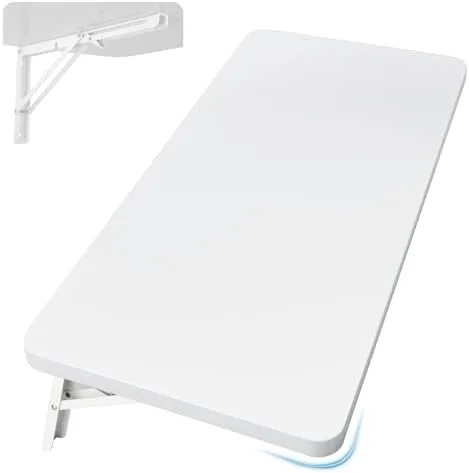
Fold a Table Flat Against the Wall When It's Not Needed
Best for: a place to set down an outfit or fold laundry that would normally eat floor room
A folding table for laying out an outfit sounds useful right up until it's just another surface collecting dust between outfits. It takes up floor room around the clock for a job it does once a day.
Mount this one to the wall and fold it down only when there's something worth setting on it. Fold it back up once it's done its job and the wall goes flat again, so the table earns its floor room instead of just squatting there.
Check price on Amazon →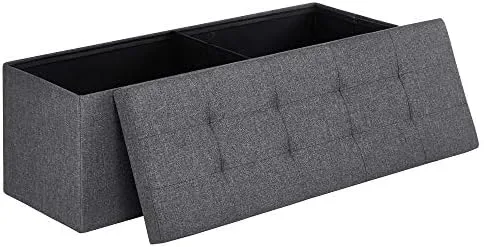
Turn a Bench Into Storage for What Used to Sit on the Floor
Best for: shoes or bags that pile up on the floor because there's nowhere else to set them
Shoes and bags that don't have a fixed spot tend to end up in a heap on the floor, right in the walkway. Plain seating would help with sitting. It does nothing about the heap, which was the actual problem.
Sit on this one the same as any bench, then lift the lid and that mess has somewhere to go. The walkway clears out because it's doing double duty, seating on top and storage underneath the exact same lid.
Check price on Amazon →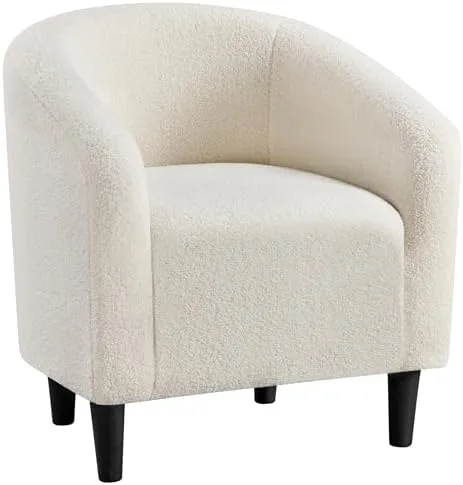
Give the Dressing Corner a Place to Sit
Best for: a dressing corner with plenty of clothes and nowhere to sit while getting dressed
Dressing corners stocked with clothes and mirrors still leave out one thing, somewhere to sit while getting dressed. Standing through the whole process gets old fast.
Set this chair in the corner and it finally gives the room somewhere to pause, pull on socks, or just set something down for a second. It's small enough not to compete with the racks around it, but it's there the moment sitting down helps.
Check price on Amazon →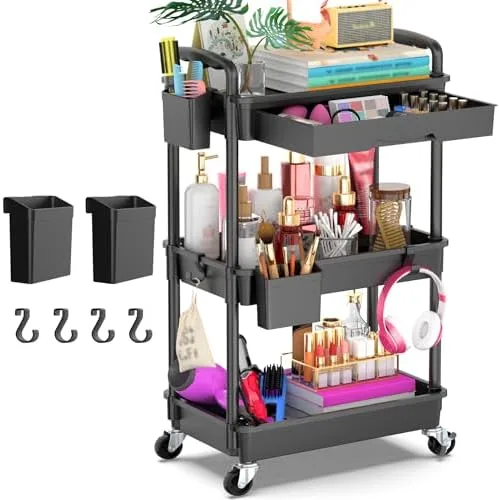
Roll Jewelry and Makeup to Wherever the Light Is Best
Best for: makeup and jewelry that always needs better light than wherever it's stored
Makeup and jewelry end up wherever there was room on move-in day, not wherever the light is good enough to use them, which is a strange way to decide where anything lives. Getting ready means hauling half of it to a mirror with better light anyway.
Load the whole collection onto this cart instead and roll it to wherever the good light lives, then roll it back once the face is done. Everything travels together on three tiers, not three separate trips carrying one handful each.
Check price on Amazon →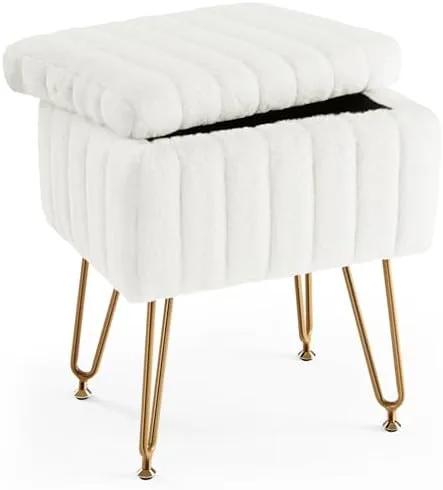
Rest Bags or Shoes on Something Besides the Floor
Best for: bags and shoes that land on the floor the second they come off
A bag or a pair of shoes coming off at the end of the day hits the floor almost on reflex, since neither one has anywhere else waiting for it. The floor just happens to be the path of least resistance, so it wins by default.
Set this ottoman in the corner and the floor finally has competition, a landing spot on top for the quick set-down, actual storage underneath once the lid lifts. Once there's somewhere better within reach, the floor stops being the default.
Check price on Amazon →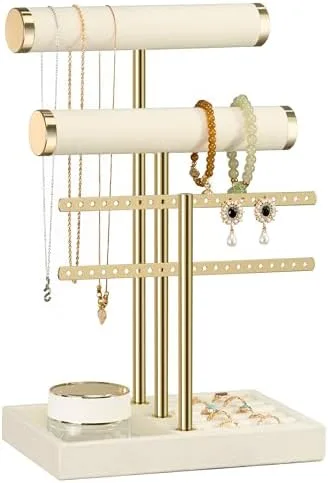
Set Jewelry Down on Its Own Stand Instead of a Bare Shelf
Best for: jewelry left in a pile on a bare shelf because there's nothing built to hold it
Jewelry set down on a bare shelf usually ends up in a pile, necklaces knotted around bracelets within a day. Nothing about a flat surface was ever going to keep any of it separate, that's just not what flat surfaces do.
Stand this on the shelf and every necklace, bracelet, and ring gets its own bar or hook to hang from. The pile stops forming because nothing's touching anything else, and everything stays exactly as untangled as it was the day it went on.
Check price on Amazon →FAQ
What's the minimum size for a walk-in closet?
The commonly cited minimum is 4x4 feet, about 16 square feet, enough for a single rod and room to stand while using it. Comfortable is closer to 6x8 feet, but plenty of walk-ins fall under that and still work fine with the right layout.How do you organize a small walk-in closet?
Start with lighting before storage. A walk-in is the one closet size where a single ceiling bulb isn't enough on its own, and adding light at shelf level solves more visibility problems than another bin ever will.What's the best lighting for a closet with no wiring?
Battery or rechargeable puck lights and plug-in pendants both work without an electrician. Rechargeable options skip the outlet requirement entirely, which matters in a closet built with no wiring and no nearby plug either.Do you need a lot of room for a dressing area in a walk-in?
No. A folding screen or a single accent chair in one corner is enough to define a dressing spot without giving up storage room anywhere else. The corner just needs a clear edge, not extra square footage.How do you add storage to a walk-in without losing floor room?
Go up before going out. Ceiling-height racks, over-the-rod baskets, and tall narrow towers all add storage without expanding the footprint. That matters more in a walk-in than people expect, since the open floor is part of what makes it feel bigger than a reach-in.How much does it cost to organize a walk-in closet?
Building a custom walk-in system can run from a couple thousand dollars into five figures for a full renovation. Organizing the walk-in that's already there costs far less, since the fixes on this list are rods, lights, and bins, not a construction project.Final Thoughts
The gap between a walk-in that works and one that doesn't usually comes down to a single missing light fixture, not a lack of room. Fix that first, and the pull-down rod, the drawer tower, and the dressing chair all start earning their keep. Skip it, and the closet just stays a bigger version of the same mess.